Safety & Relief Valves
Pressure relief and safety valves for overpressure protection of vessels and systems.
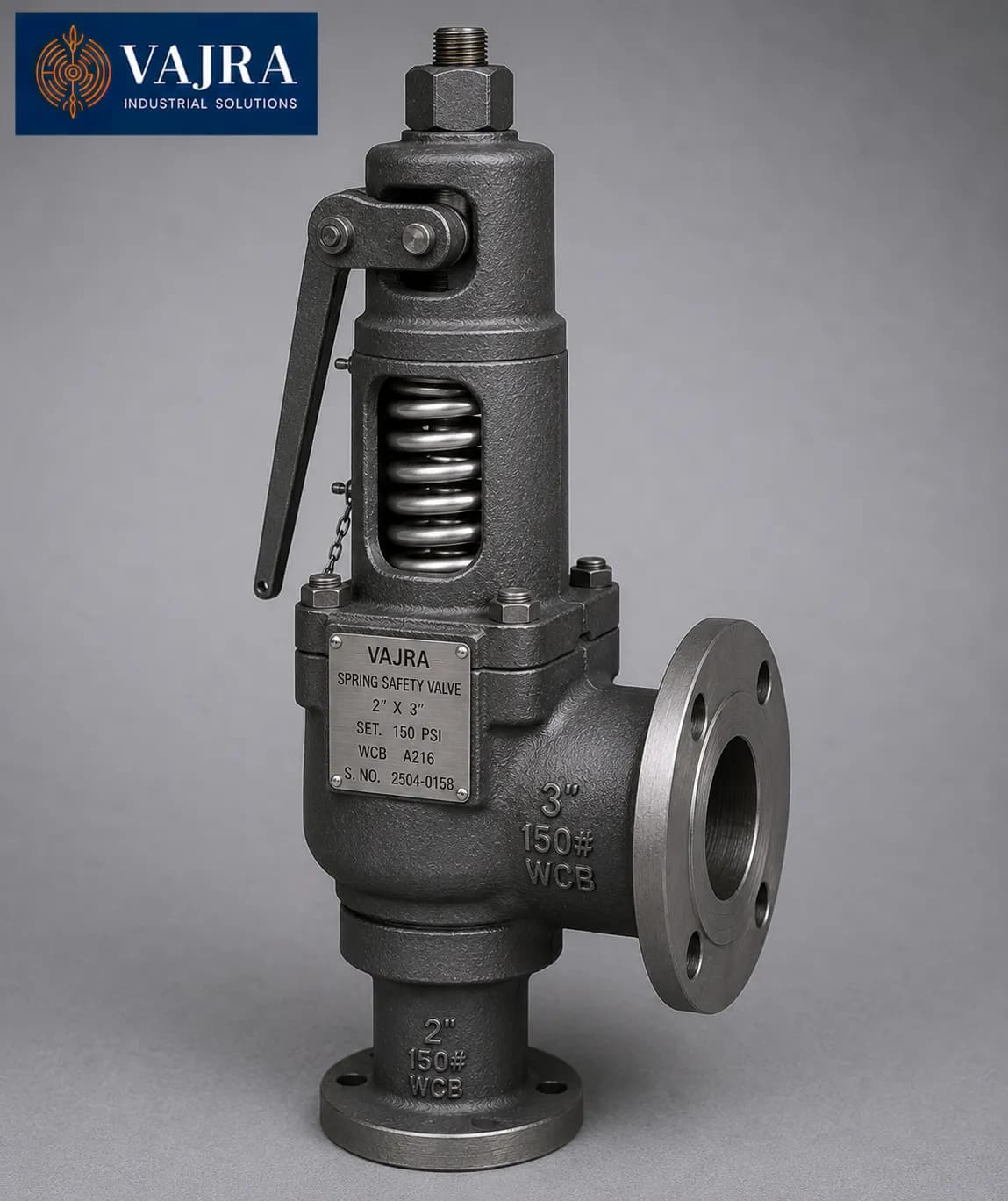
Spring Loaded Safety Valve
Direct-acting spring-loaded design for reliable overpressure protection.
Technical Specifications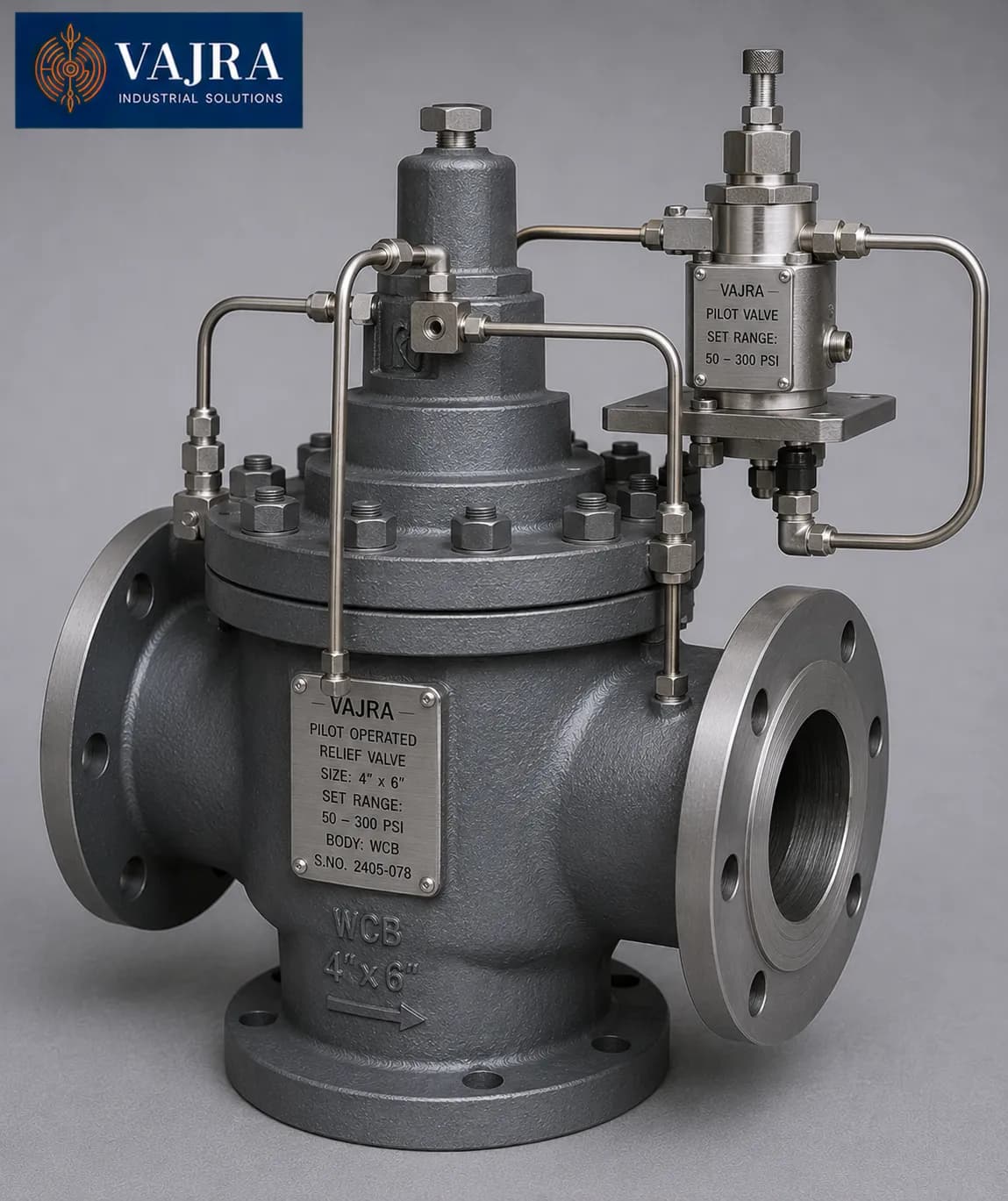
Pilot Operated Relief Valve
Pilot-controlled valve for precise pressure control and high-capacity relief.
Technical Specifications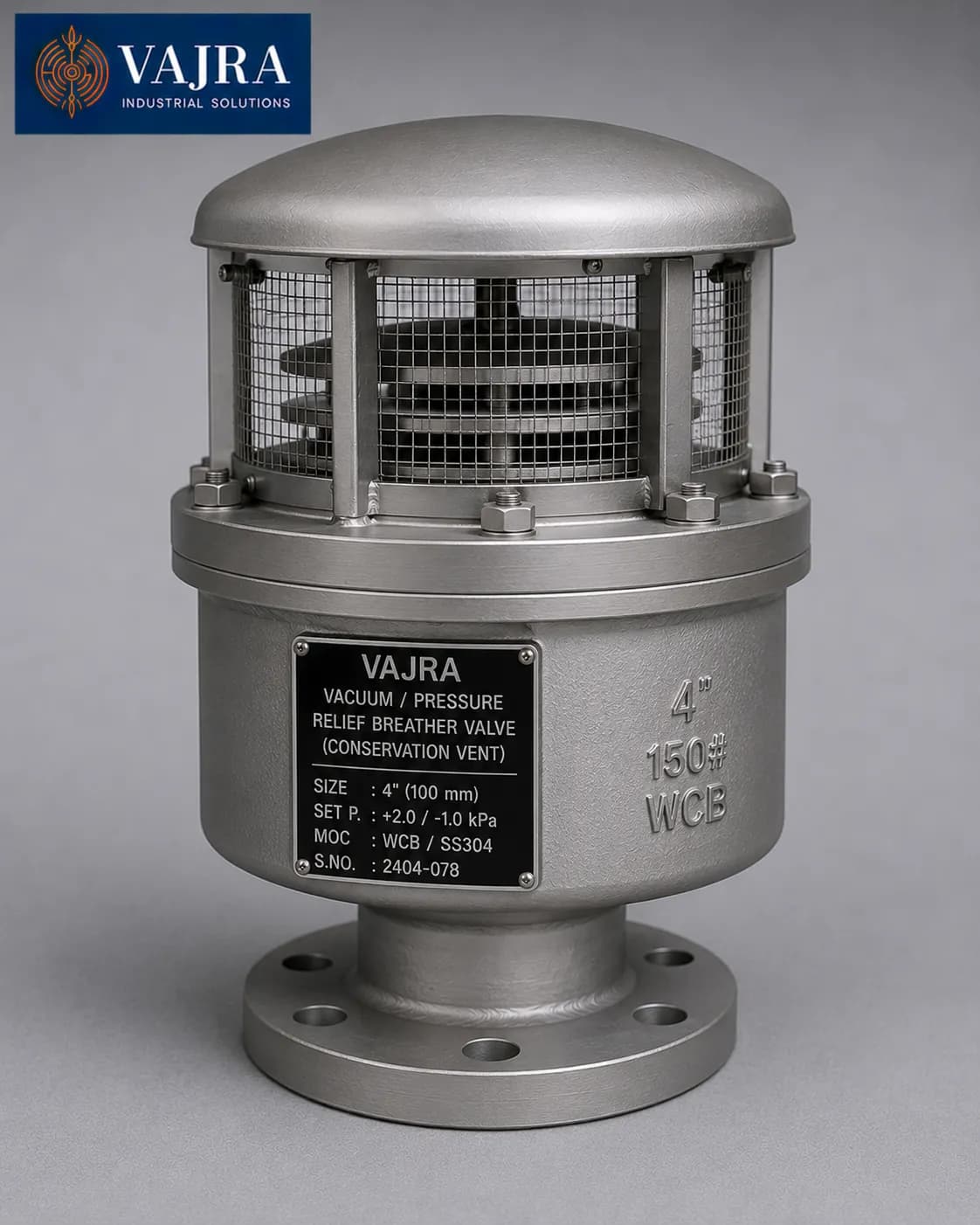
Vacuum Relief / Breather Valve
Tank breathing valve that opens on vacuum or pressure to protect storage tanks from over- or under-pressure.
Technical SpecificationsNeed Safety & Relief Valves?
Get a competitive quote within 24 hours - API 6D, ASME B16.34 certified.
Frequently Asked Questions
Technical questions about Safety & Relief Valves - selection, materials, standards & ordering
How is a safety valve sized - what information do I need to provide?+
Safety valve sizing to API 520 Part I requires five parameters: (1) Set pressure = MAWP of the protected vessel or system; (2) Operating temperature at the valve inlet at relieving conditions; (3) Required relieving capacity - in kg/h for vapour/steam, kg/h or m³/h for liquid, or SCFM for gas - based on the most demanding relieving scenario (fire case, blocked outlet, or control valve failure); (4) Fluid type (gas, vapour, steam, or liquid - API 520 has separate sizing equations for each); (5) Back pressure at the outlet connection. Provide all five and our technical team will calculate the required orifice designation (D through T) to API 526.
What is the difference between a safety valve and a relief valve?+
Safety valves are designed for compressible fluids (steam, gas, vapour): they feature a rapid, full-pop-open action once the set pressure is reached, maintaining full lift until pressure drops below the re-seat point. Relief valves are for incompressible liquids: they open proportionally - gradually increasing flow with increasing overpressure. Safety relief valves (our standard supply) are dual-duty - certified for both compressible and incompressible service. All three terms are often used interchangeably, but the correct term per ASME Section VIII is 'pressure relief valve.'
What is the difference between a conventional and balanced bellows safety valve?+
Conventional (open bonnet) safety valves are affected by back pressure: if outlet back pressure exceeds approximately 10% of set pressure, the effective set point increases and capacity decreases. They are suitable when outlet back pressure is low and constant. Balanced bellows valves use a metallic bellows to isolate the spring chamber from the outlet: set pressure and capacity are independent of back pressure up to 50% of set pressure (for built-up back pressure) or higher (for superimposed back pressure). Specify balanced bellows when connecting to a manifold discharge header with significant back pressure, or when the outlet fluid is toxic or corrosive.
How often should safety valves be tested and recertified?+
API RP 576 and API 510 recommend inspection intervals of 3–10 years for safety valves in process service, with the specific interval determined by the fluid service, historical performance, and risk assessment. Clean, non-corrosive steam and air services typically allow 5–10 year intervals; corrosive, dirty, or reactive fluid services may require annual inspection. All Vajra safety valves are supplied with a factory test certificate (set pressure stamped and documented). Field recertification (pop testing and reseating) must be performed by an authorised inspection body or valve service centre.
Procurement & Specification
Typical Applications
Available Standards
Material Options
Documentation Available
- -EN 10204 3.1 Material Test Certificates (heat traceable)
- -API 598 hydrostatic shell & seat test reports
- -Dimensional inspection reports
- -Full Manufacturing Data Record (MDR) / data book on request
Inspection Options
- -In-house QC inspection on every order
- -Third-party inspection (SGS / Bureau Veritas / TÜV / DNV) coordination
- -Witness and hold points accommodated on request
Order Quantities
Flexible — from single critical-spare valves to full project lots.
Export
Worldwide export with complete documentation (COO, EUR.1, packing lists) to 20+ countries.
Custom Engineering
Built to your specification — materials, trim, pressure class and special service (NACE, fire-safe, IBR, cryogenic).
Delivery Support
Dispatch from Vadodara, Gujarat with documented lead times and priority handling for urgent requirements.
Engineering references
Connected Engineering
Technical Guides
Learn More About Safety & Relief Valves
Technical Guides · 12 min read
Pressure Relief Valve Sizing and Selection: API 520 & API 521 Guide
Pressure relief valves (PRVs) are the last line of defence against vessel overpressure. Correct sizing per API 520 Part I and API 521 is critical for plant safety, regulatory compliance, and avoiding costly undersizing or oversizing errors.
Read Guide
Technical Guides · 10 min read
Valve Testing and Inspection Standards: API 598, ISO 5208, and BS 6755
Every industrial valve must be pressure-tested before shipment to verify structural integrity and seat leakage. API 598, ISO 5208, and BS 6755 define the test pressures, durations, and acceptance criteria that differentiate a certified valve from a questionable one.
Read Guide
Valve Engineering · 9 min read
Valve Certification and Material Traceability for Critical Service Applications
When a valve fails in a critical service - high-pressure steam, sour oil and gas, nuclear, or toxic chemical service - the consequences extend far beyond the cost of replacement. Proper material certification and end-to-end traceability from mill certificate to installed component is the foundation of process safety. This guide explains the complete certification chain, what documents to demand from suppliers, and how to verify them.
Read Guide
Valve Comparisons