Control Valves
Precision-engineered control valves for throttling, modulating, and flow control in critical process applications.
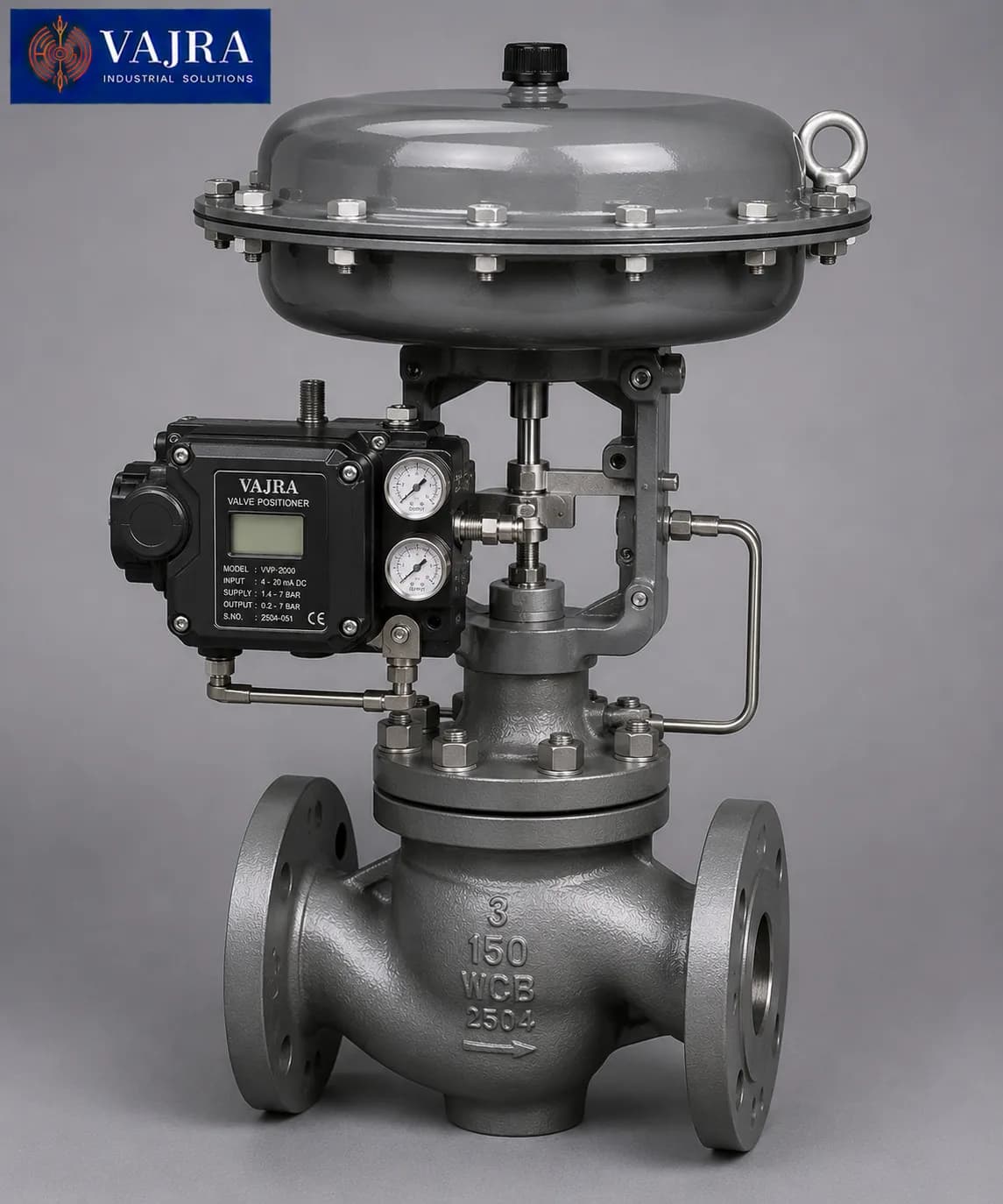
Globe Type Control Valve
Single-seated or double-seated globe control valve with cage trim for precise modulating service in process industries.
Technical Specifications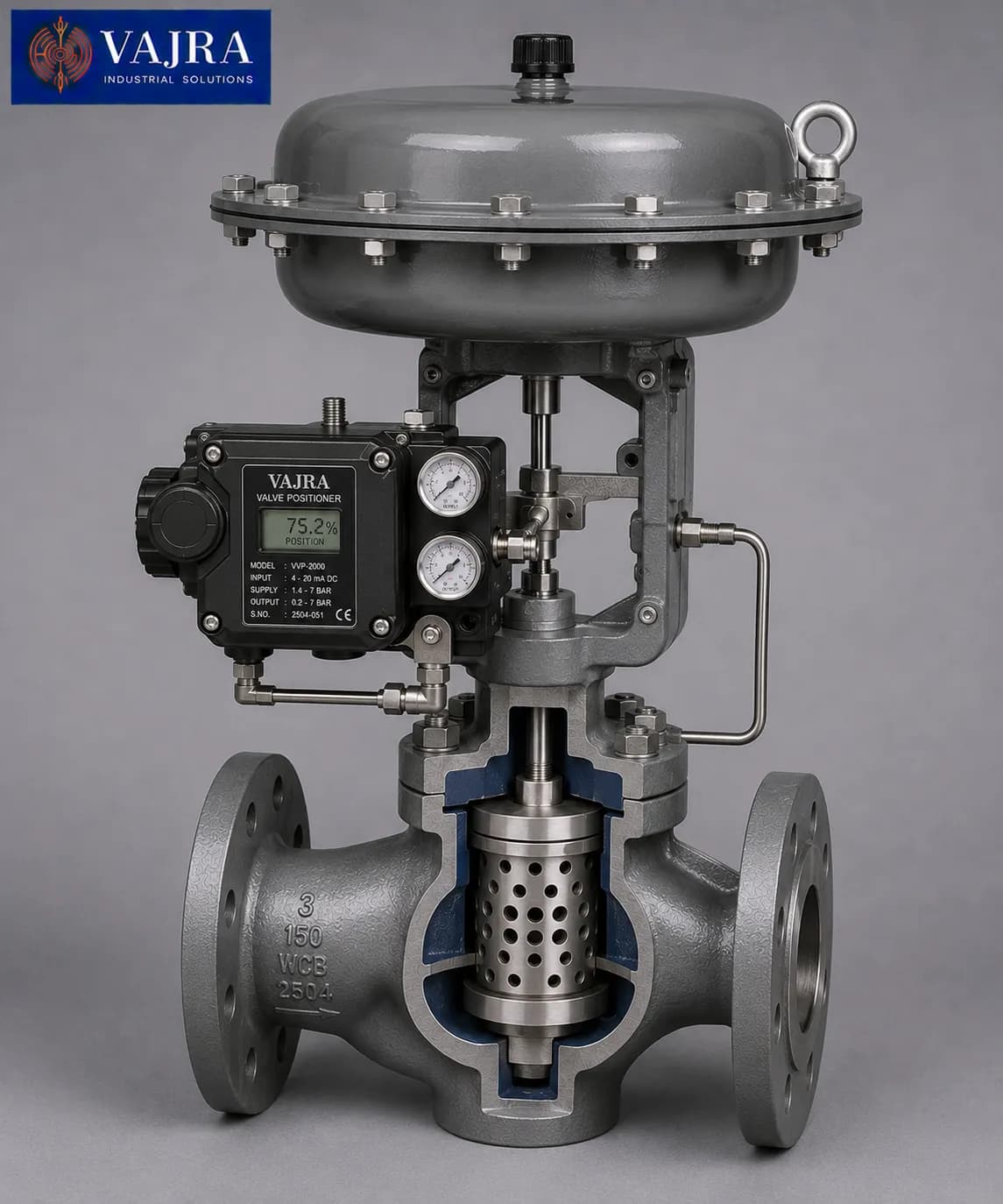
Cage Guided Control Valve
High-capacity cage-guided single-seated control valve with anti-cavitation and noise-attenuation trim options.
Technical Specifications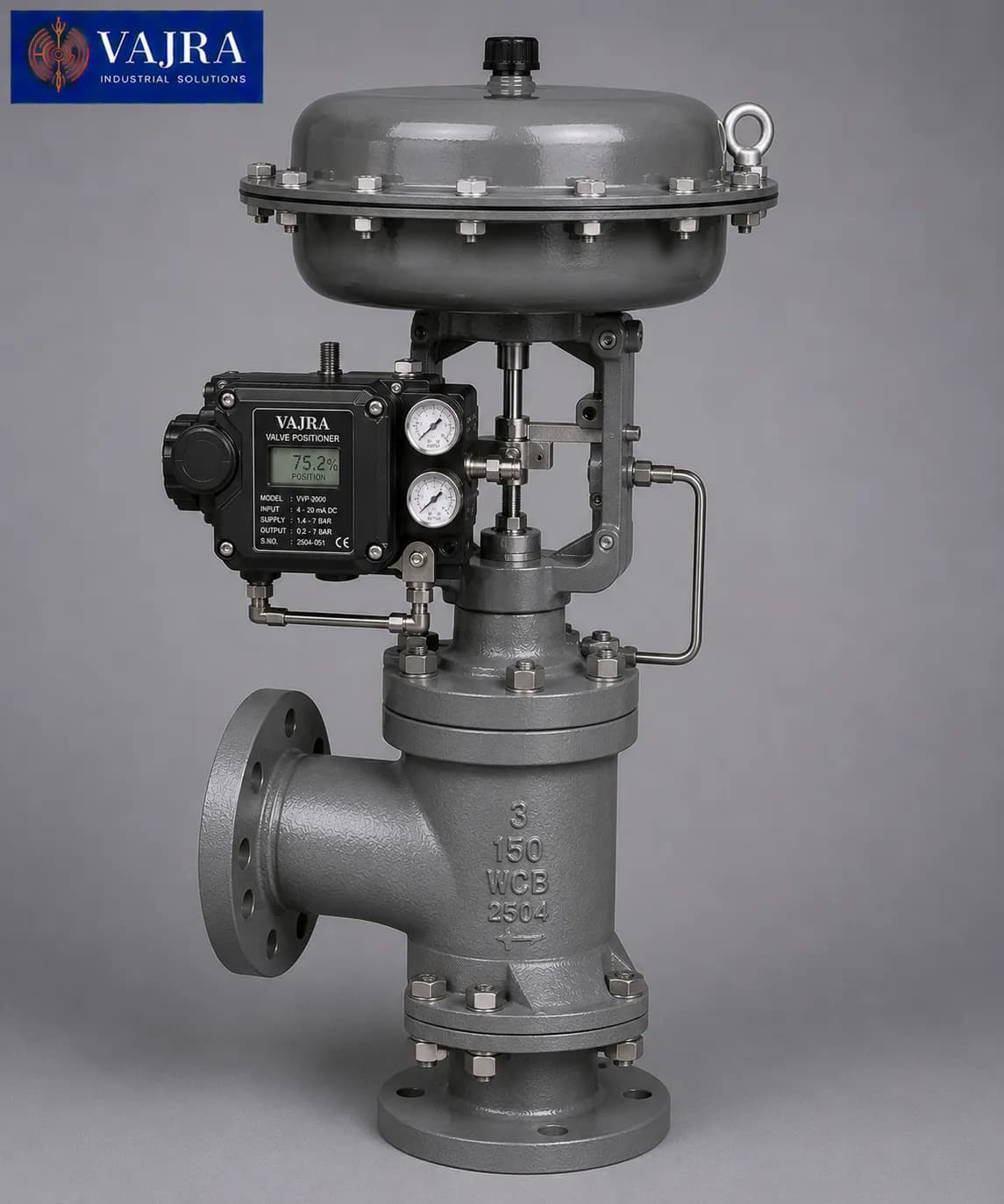
Angle Type Control Valve
90° angle body control valve for high-pressure drop, flashing, and erosive fluid services where standard globe valves fail prematurely.
Technical Specifications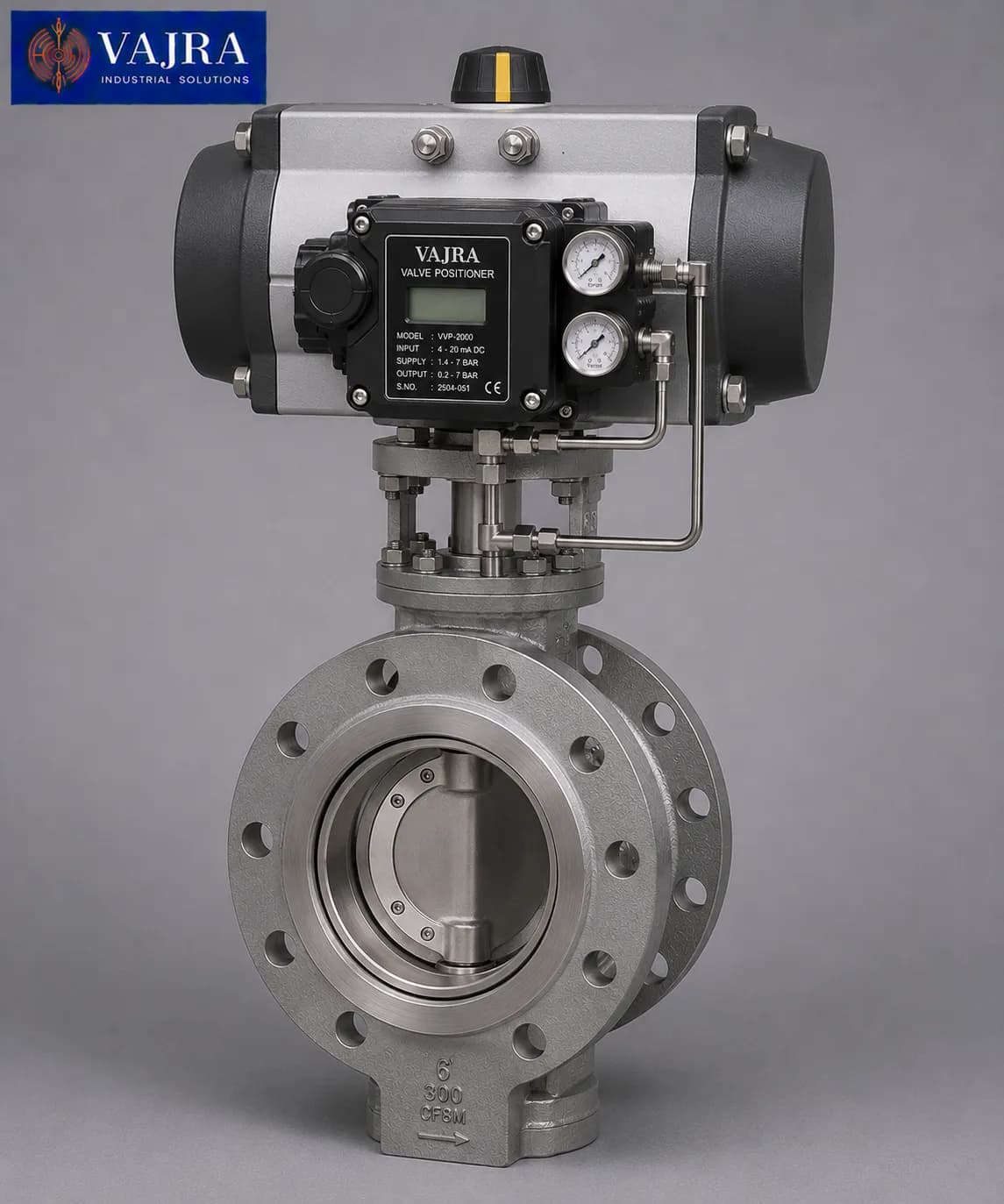
High-Performance Butterfly Control Valve
Double-offset butterfly valve with characterized disc for modulating control in large-diameter pipelines.
Technical SpecificationsNeed Control Valves?
Get a competitive quote within 24 hours - API 6D, ASME B16.34 certified.
Frequently Asked Questions
Technical questions about Control Valves - selection, materials, standards & ordering
What is Cv and how is it used to size a control valve?+
Cv is the flow coefficient of a control valve - defined as the flow rate in US gallons per minute of 60°F water that produces exactly 1 psi pressure drop across the valve. It is the universal sizing parameter for control valves. To size a valve, calculate the required Cv from your process data (flow rate, fluid density, inlet and outlet pressures) using the IEC 60534-2 equations. Then select a valve whose Cv at 70–80% travel matches the calculated Cv - this keeps the valve operating in its most controllable mid-range rather than near the ends of travel where the flow characteristic is non-linear.
When should I specify equal-percentage trim vs. linear trim?+
Equal-percentage trim (flow increases exponentially with travel - small incremental changes at low travel, large incremental changes at high travel) is the correct choice when the control valve is one of several pressure drops in a liquid system - the pressure split between valve and pipe changes with flow, and equal-percentage characteristic compensates for this non-linearity, providing a more linear installed characteristic. Linear trim (flow proportional to travel) is correct when the control valve is the dominant pressure drop in the system, for gas pressure control, or for liquid level control where a proportional installed response is required.
What is anti-cavitation trim and when is it required?+
Cavitation occurs when local pressure in the liquid stream drops below the fluid's vapour pressure, forming vapour bubbles that collapse violently near the valve plug and seat, causing erosion, noise (up to 120 dB), and vibration. Anti-cavitation trim stages the pressure drop across multiple restriction stages (perforated cage or stacked discs), keeping local pressure above vapour pressure at every stage. Specify anti-cavitation trim when your sizing calculation shows σ (sigma, the cavitation index) below the valve's critical σ value, typically when the valve pressure drop exceeds 40–60% of the inlet absolute pressure.
What leakage class should I specify for a control valve?+
ANSI/FCI 70-2 and IEC 60534-4 define six seat leakage classes. Class I: no test required. Class II: 0.5% of rated Cv - standard metal seat. Class III: 0.1% - tighter metal seat. Class IV: 0.01% Cv - typical metal seat in good condition. Class V: 0.0005 ml/min/inch bore/psi ΔP - hard seat, lapped metal-to-metal. Class VI: bubble-tight (< defined bubble count in 1 min) - soft seat (PTFE, elastomer). Specify Class IV for general isolation after control, Class VI for tight shut-off where leakage to atmosphere or across the seat is not permitted.
Procurement & Specification
Typical Applications
Available Standards
Material Options
Documentation Available
- -EN 10204 3.1 Material Test Certificates (heat traceable)
- -API 598 hydrostatic shell & seat test reports
- -Dimensional inspection reports
- -Full Manufacturing Data Record (MDR) / data book on request
Inspection Options
- -In-house QC inspection on every order
- -Third-party inspection (SGS / Bureau Veritas / TÜV / DNV) coordination
- -Witness and hold points accommodated on request
Order Quantities
Flexible — from single critical-spare valves to full project lots.
Export
Worldwide export with complete documentation (COO, EUR.1, packing lists) to 20+ countries.
Custom Engineering
Built to your specification — materials, trim, pressure class and special service (NACE, fire-safe, IBR, cryogenic).
Delivery Support
Dispatch from Vadodara, Gujarat with documented lead times and priority handling for urgent requirements.
Engineering references
Connected Engineering
Technical Guides
Learn More About Control Valves
Engineering & Design · 11 min read
Control Valve Sizing and Cv Calculation: A Step-by-Step Engineering Guide
Control valve sizing is the most critical step in ensuring stable and accurate process control. An oversized valve operates at low opening and is prone to instability and seat erosion; an undersized valve starves the process and cannot meet maximum flow demand. This guide explains the Cv flow coefficient method, ISA/IEC 60534 equations for liquid, gas and steam, and common sizing pitfalls to avoid.
Read Guide
Actuators & Automation · 9 min read
Industrial Valve Actuators: Pneumatic, Electric and Hydraulic Selection Guide
Selecting the right actuator type for an automated valve is as critical as selecting the valve itself. Pneumatic, electric, and hydraulic actuators each have distinct characteristics, advantages, and limitations that make them suitable for different process environments and control requirements.
Read Guide
Technical Guides · 9 min read
High-Temperature Valve Selection Guide - Above 300°C to 600°C
Selecting valves above 300°C requires Cr-Mo alloy steel bodies, Stellite trim, graphite packing, and verification against API 941 Nelson curves - this guide explains every decision point.
Read Guide
Valve Comparisons