Diaphragm Valves
Elastomer-lined valves for corrosive, abrasive, and sterile applications.
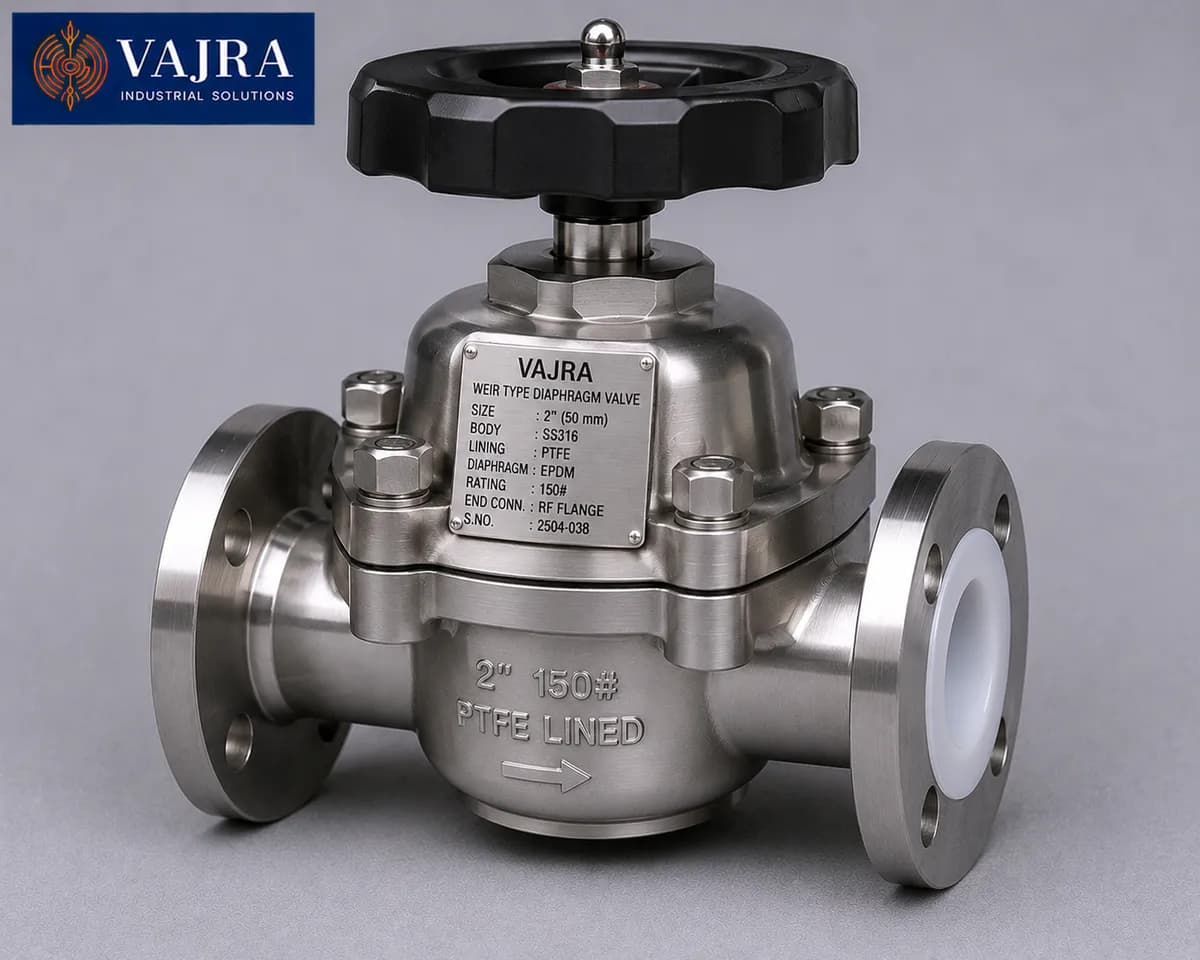
Weir Type Diaphragm Valve
Raised weir design for precise flow control and tight shut-off in chemical applications.
Technical Specifications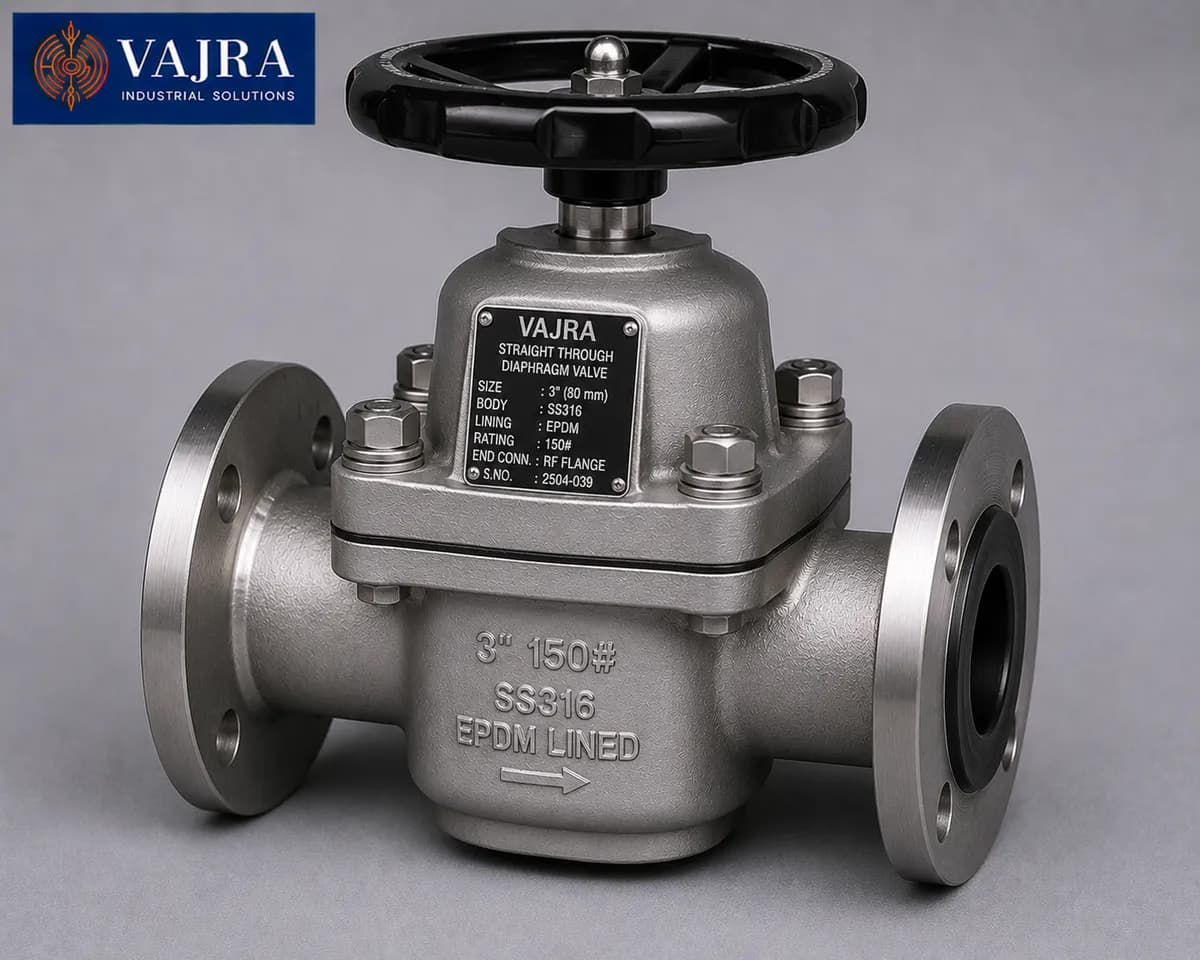
Straight-Through Diaphragm Valve
Full-bore design for slurry and viscous media with minimal flow restriction.
Technical SpecificationsNeed Diaphragm Valves?
Get a competitive quote within 24 hours - API 6D, ASME B16.34 certified.
Frequently Asked Questions
Technical questions about Diaphragm Valves - selection, materials, standards & ordering
What is the difference between a weir-type and a straight-through diaphragm valve?+
Weir-type diaphragm valves have a raised saddle (weir) inside the body that the diaphragm presses against to close. The shorter diaphragm stroke gives better throttling control, lower actuator force, and longer diaphragm life. Best for clean, low-viscosity, non-coating fluids. Straight-through (full-bore) diaphragm valves have no weir - the diaphragm must span the full bore to close, requiring a longer stroke and higher actuating force. They are preferred for slurries, viscous media, fibrous fluids, and applications where any flow restriction behind a weir would cause solid build-up or coating.
Are your diaphragm valves suitable for pharmaceutical and GMP service?+
Yes. We supply SS316L diaphragm valves with electropolished interior finish (Ra ≤ 0.4 μm or Ra ≤ 0.8 μm), EPDM/PTFE overlay or pure PTFE diaphragms, aseptic bonnet design (no dead zones or crevices for microbial growth), and full compliance documentation: 3-A Sanitary Standards, FDA 21 CFR, USP Class VI, and EHEDG Category I. These valves are used in WFI (Water for Injection), purified water, CIP/SIP cleaning circuits, bioreactor media lines, and sterile filling systems.
How do I select the right diaphragm material?+
PTFE: broadest chemical resistance, lowest extractables, highest purity - specify for concentrated acids, solvents, and pharmaceutical service. EPDM: best for hot water, steam (CIP/SIP up to 143°C), and mild chemicals - widest availability for food and pharma. Natural Rubber: best flexibility at low temperatures and in vacuum service; suited for abrasive particle slurry. Neoprene: moderate oil and weather resistance. NBR: petroleum-based fluids and fuels. For unusual fluids, request a chemical compatibility chart or contact our technical team with fluid, concentration, and temperature data.
Can diaphragm valves be automated with pneumatic or electric actuators?+
Yes - all Vajra diaphragm valves are available with pneumatic (air-operated diaphragm actuator), electric rotary actuator, or handwheel operation. Pneumatic actuators are most common: spring-return (fail-open or fail-closed) for ESD applications; double-acting for process control. Electric actuators allow operation where instrument air is unavailable. ISO 5211 top-works are standard. For pharmaceutical service, specify electropolished stainless steel actuator bodies and avoid aluminium in areas that contact cleaning chemicals.
Procurement & Specification
Typical Applications
Available Standards
Material Options
Documentation Available
- -EN 10204 3.1 Material Test Certificates (heat traceable)
- -API 598 hydrostatic shell & seat test reports
- -Dimensional inspection reports
- -Full Manufacturing Data Record (MDR) / data book on request
Inspection Options
- -In-house QC inspection on every order
- -Third-party inspection (SGS / Bureau Veritas / TÜV / DNV) coordination
- -Witness and hold points accommodated on request
Order Quantities
Flexible — from single critical-spare valves to full project lots.
Export
Worldwide export with complete documentation (COO, EUR.1, packing lists) to 20+ countries.
Custom Engineering
Built to your specification — materials, trim, pressure class and special service (NACE, fire-safe, IBR, cryogenic).
Delivery Support
Dispatch from Vadodara, Gujarat with documented lead times and priority handling for urgent requirements.
Engineering references
Connected Engineering
Technical Guides
Learn More About Diaphragm Valves
Valve Selection · 9 min read
Diaphragm Valve Design and Pharmaceutical Applications: A Complete Guide
Diaphragm valves use a flexible membrane to isolate the flow from the valve body, making them the valve of choice for pharmaceutical, biotech and high-purity applications. This guide covers diaphragm valve design types, elastomer selection, USP Class VI and 3-A Sanitary Standards compliance, and CIP/SIP suitability.
Read Guide
Technical Guides · 9 min read
Valve Seat Materials Selection Guide: PTFE, RPTFE, Metal, and Elastomer Seats
The seat material in an industrial valve determines sealing performance, temperature range, chemical compatibility, and service life. This guide covers PTFE, RPTFE, nylon, PEEK, elastomers (EPDM, NBR, FKM), and metal seats - with selection criteria for each service type.
Read Guide
Industry Applications · 10 min read
How to Specify Industrial Valves for Chemical Service: A Complete Guide
Chemical plants handle some of the most aggressive fluids in any industry - strong acids, chlorinated solvents, caustic solutions, oxidising agents, and toxic gases. Specifying the wrong valve body material, seat, or seal material can lead to catastrophic corrosion, product contamination, or unsafe failure. This guide covers every variable in chemical valve specification.
Read Guide