Plug Valves
Quarter-turn valves with cylindrical or tapered plugs for quick shut-off and throttling.
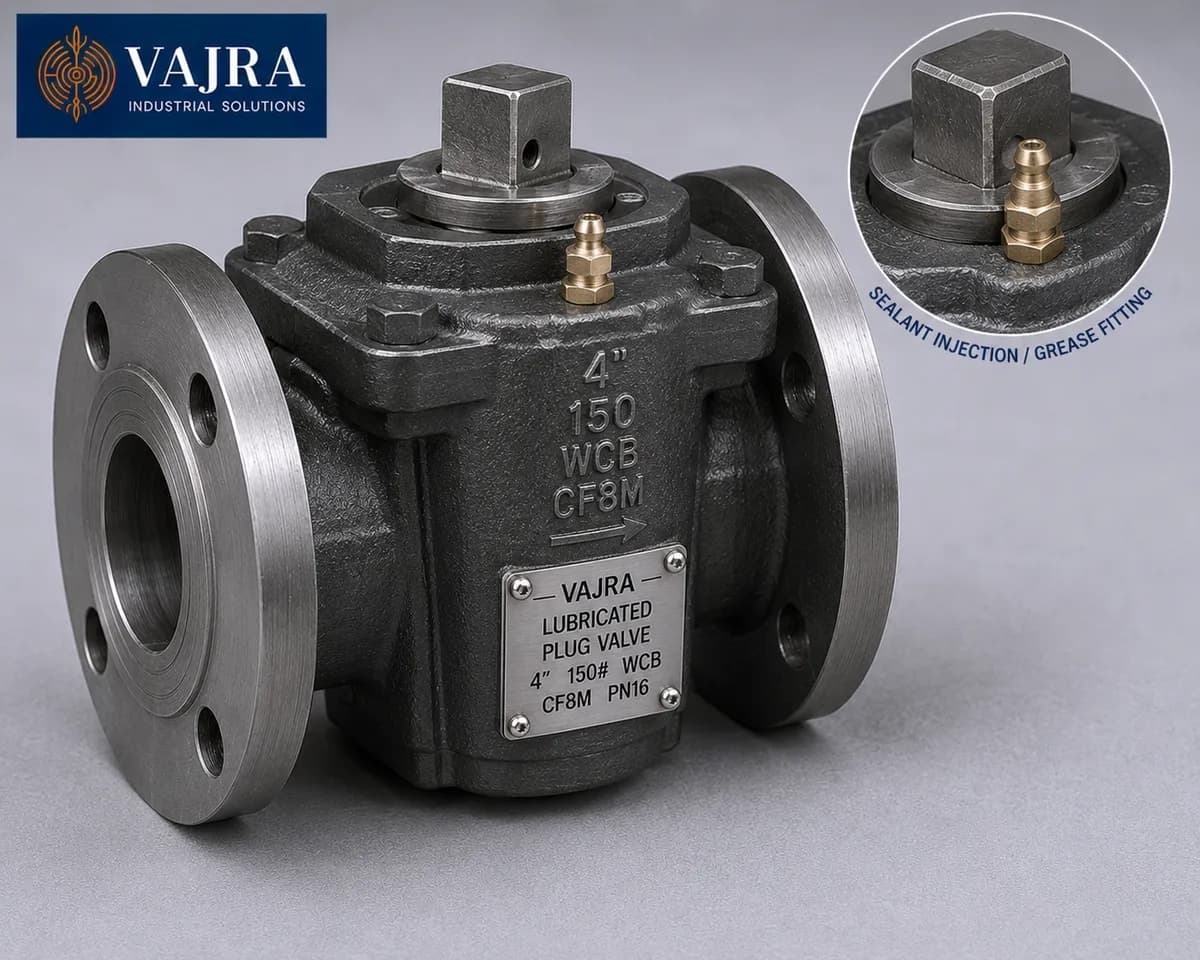
Lubricated Plug Valve
Metal-seated plug valve with lubricant injection for gas and slurry applications.
Technical Specifications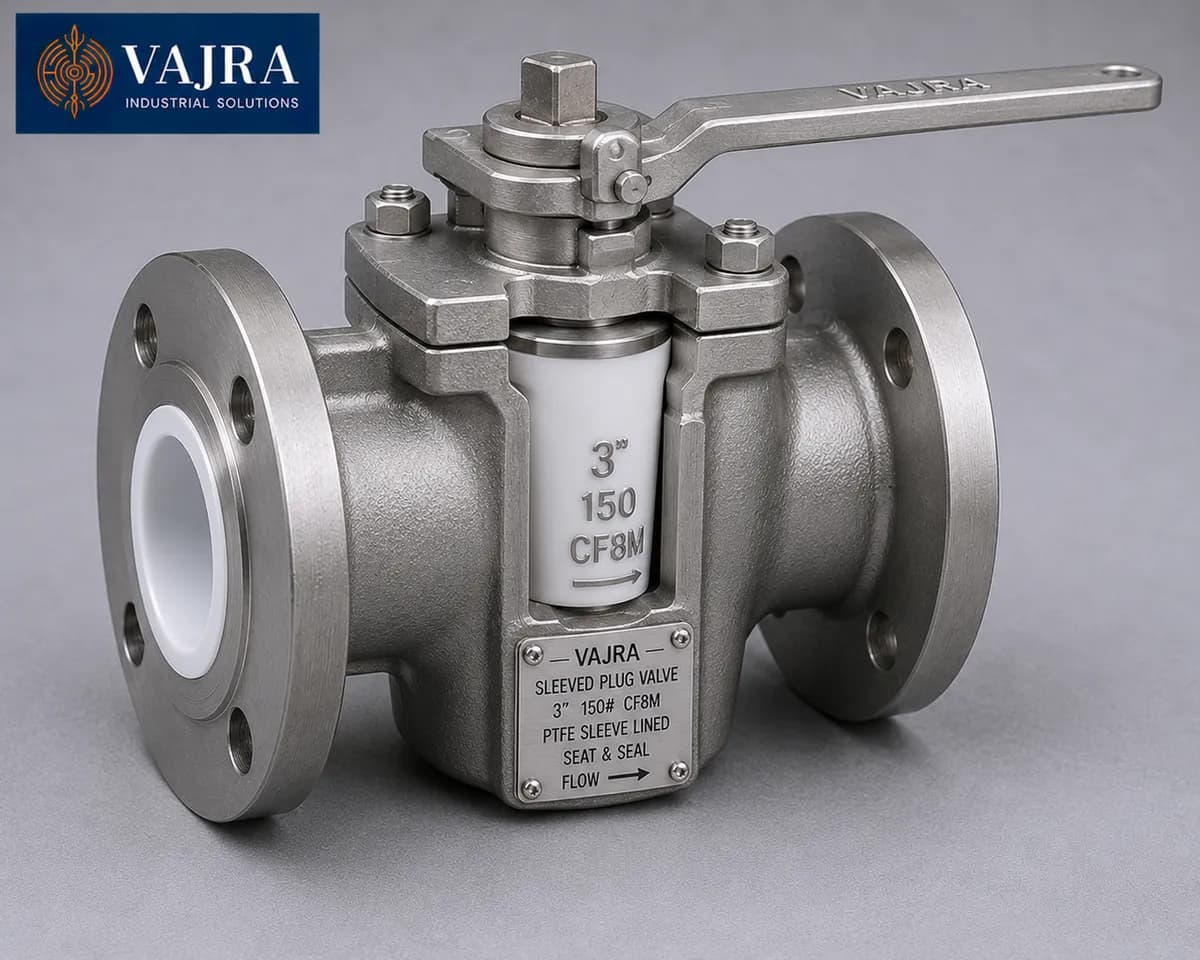
Sleeved Plug Valve
Self-lubricating PTFE sleeved design for chemical and corrosive media applications.
Technical Specifications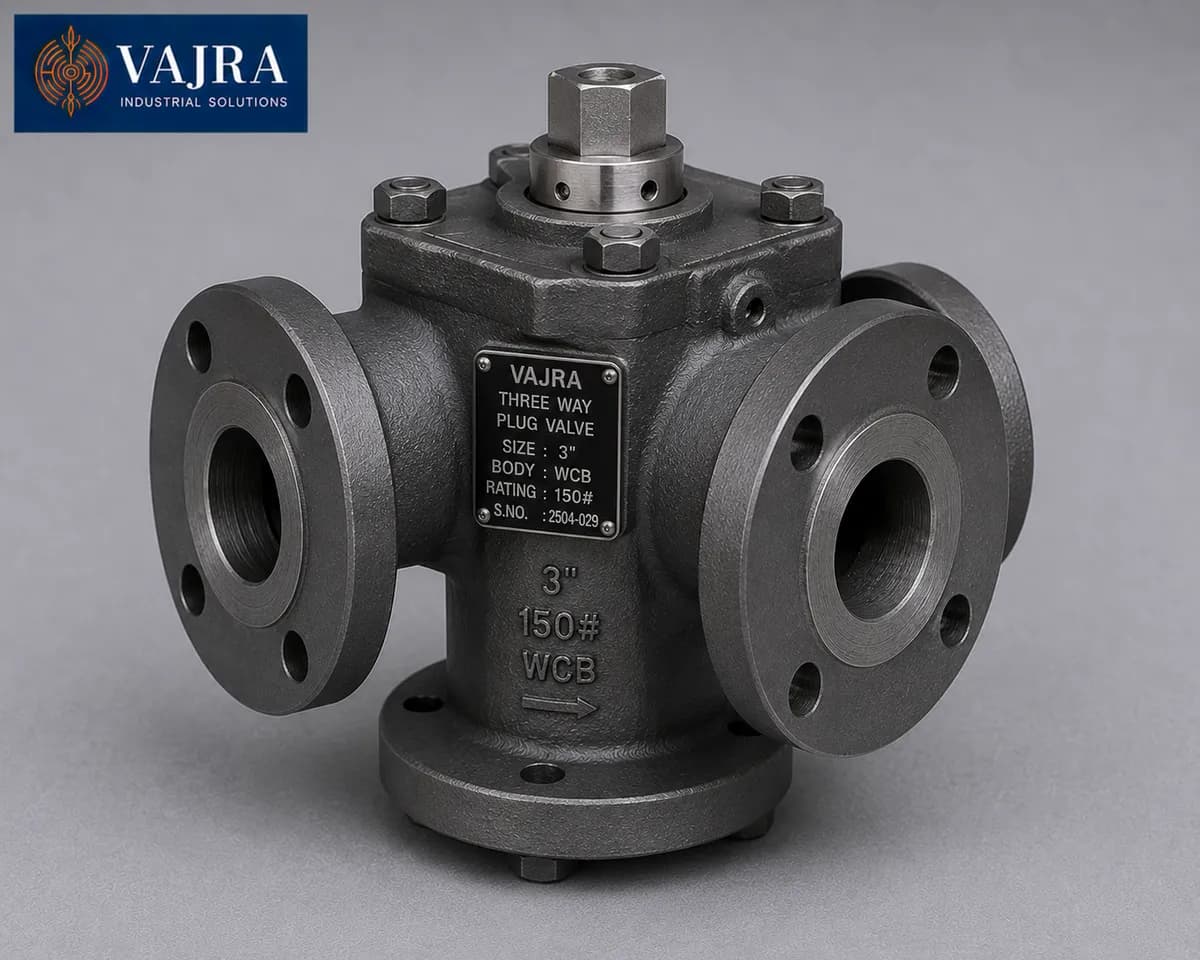
3-Way Plug Valve
Multi-port plug valve for diverting, mixing, or directing flow between two or three pipeline circuits.
Technical SpecificationsNeed Plug Valves?
Get a competitive quote within 24 hours - API 6D, ASME B16.34 certified.
Frequently Asked Questions
Technical questions about Plug Valves - selection, materials, standards & ordering
What is the difference between a lubricated and a non-lubricated plug valve?+
Lubricated plug valves inject a sealant compound between the plug and the body bore: the sealant fills micro-surface imperfections, reducing operating torque and providing sealing. They are suited to gas distribution, sour service (H₂S), and abrasive slurry where metal-to-metal contact would seize. Non-lubricated (PTFE-sleeved) plug valves use a PTFE or PFA sleeve liner as the seating surface - self-lubricating, no sealant required, maintenance-free, and preferred for chemical service where sealant contamination is unacceptable.
Can plug valves provide bi-directional shut-off?+
Yes - plug valves provide bi-directional shut-off because both upstream and downstream port faces of the tapered or cylindrical plug contact the body bore. This makes them suitable for applications where flow can reverse direction - pipeline manifolds, compressor station bypass lines, and crude oil gathering systems with back-pressure surges. For bi-directional gas service, specify a pressure-balanced lubricated plug valve which uses equalised line pressure to help maintain plug-to-body contact.
What is a 3-way plug valve used for?+
A 3-way plug valve is used to divert, mix, or switch flow between two pipeline circuits from a single valve body. T-port configuration: with one inlet and two outlets, the T-port can direct flow to either outlet independently or - at 45° - simultaneously to both (mixing or splitting). L-port configuration: connects inlet to one outlet only (full diversion). Common applications: tank switching manifolds, heat exchanger by-pass switching, sampling line selection, and chemical dosing manifolds.
Are plug valves fire-safe?+
Lubricated metal-to-metal plug valves are inherently resistant to fire - there are no elastomers to fail. PTFE-sleeved plug valves lose their sleeve seal in fire conditions; fire-safe versions with a secondary metal seat and graphite packing backup are available and tested to API 607 for critical hydrocarbon service. If your application is in a classified hydrocarbon service area, confirm whether a fire-safe certification is required by your plant engineering standard before ordering.
Procurement & Specification
Typical Applications
Available Standards
Material Options
Documentation Available
- -EN 10204 3.1 Material Test Certificates (heat traceable)
- -API 598 hydrostatic shell & seat test reports
- -Dimensional inspection reports
- -Full Manufacturing Data Record (MDR) / data book on request
Inspection Options
- -In-house QC inspection on every order
- -Third-party inspection (SGS / Bureau Veritas / TÜV / DNV) coordination
- -Witness and hold points accommodated on request
Order Quantities
Flexible — from single critical-spare valves to full project lots.
Export
Worldwide export with complete documentation (COO, EUR.1, packing lists) to 20+ countries.
Custom Engineering
Built to your specification — materials, trim, pressure class and special service (NACE, fire-safe, IBR, cryogenic).
Delivery Support
Dispatch from Vadodara, Gujarat with documented lead times and priority handling for urgent requirements.
Engineering references
Connected Engineering
Technical Guides
Learn More About Plug Valves
Valve Types · 8 min read
Plug Valve Types and Selection Guide: Lubricated, Eccentric and Lined
Plug valves use a tapered or cylindrical plug to provide quarter-turn on/off isolation. This guide compares lubricated, non-lubricated, eccentric and lined designs, covering construction, pressure ratings, standards and industry applications.
Read Guide
Industry Applications · 10 min read
How to Specify Industrial Valves for Chemical Service: A Complete Guide
Chemical plants handle some of the most aggressive fluids in any industry - strong acids, chlorinated solvents, caustic solutions, oxidising agents, and toxic gases. Specifying the wrong valve body material, seat, or seal material can lead to catastrophic corrosion, product contamination, or unsafe failure. This guide covers every variable in chemical valve specification.
Read Guide
Materials & Standards · 8 min read
Industrial Valve Materials Guide: Carbon Steel, Stainless Steel, Alloy Steel and Exotic Alloys
Selecting the right valve material is critical to safety, longevity, and total cost of ownership. This guide covers all common valve body and trim materials - from carbon steel WCB to exotic Hastelloy and Inconel - with applications, temperature limits, and ASTM designations.
Read Guide
Valve Comparisons