Actuators
Pneumatic and electric actuators for automated valve operation and control.
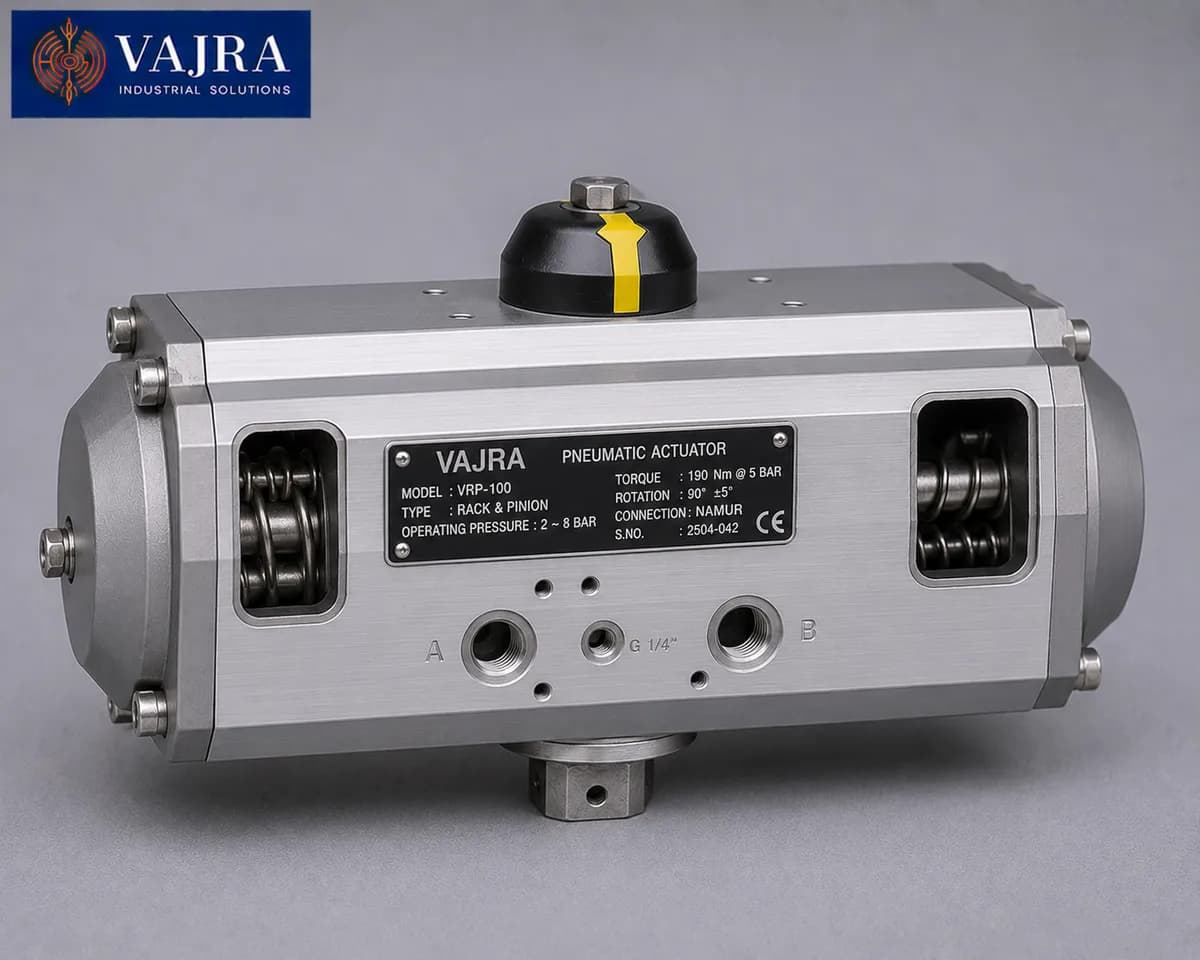
Pneumatic Rack & Pinion Actuator
Double acting or spring return actuators for 90-degree rotation valves.
Technical Specifications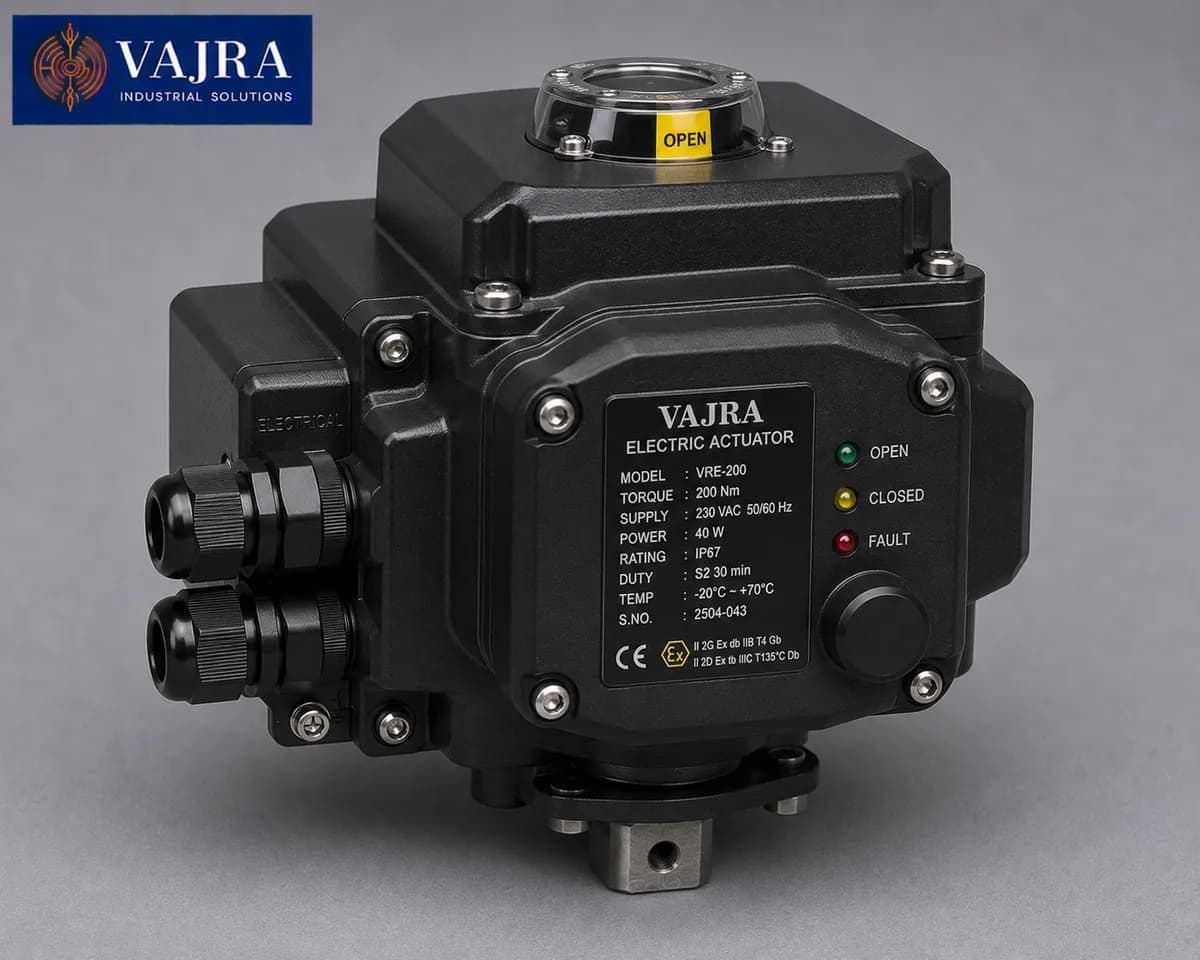
Electric Motor Actuator
Electric actuator for precise positioning and modulating control applications.
Technical Specifications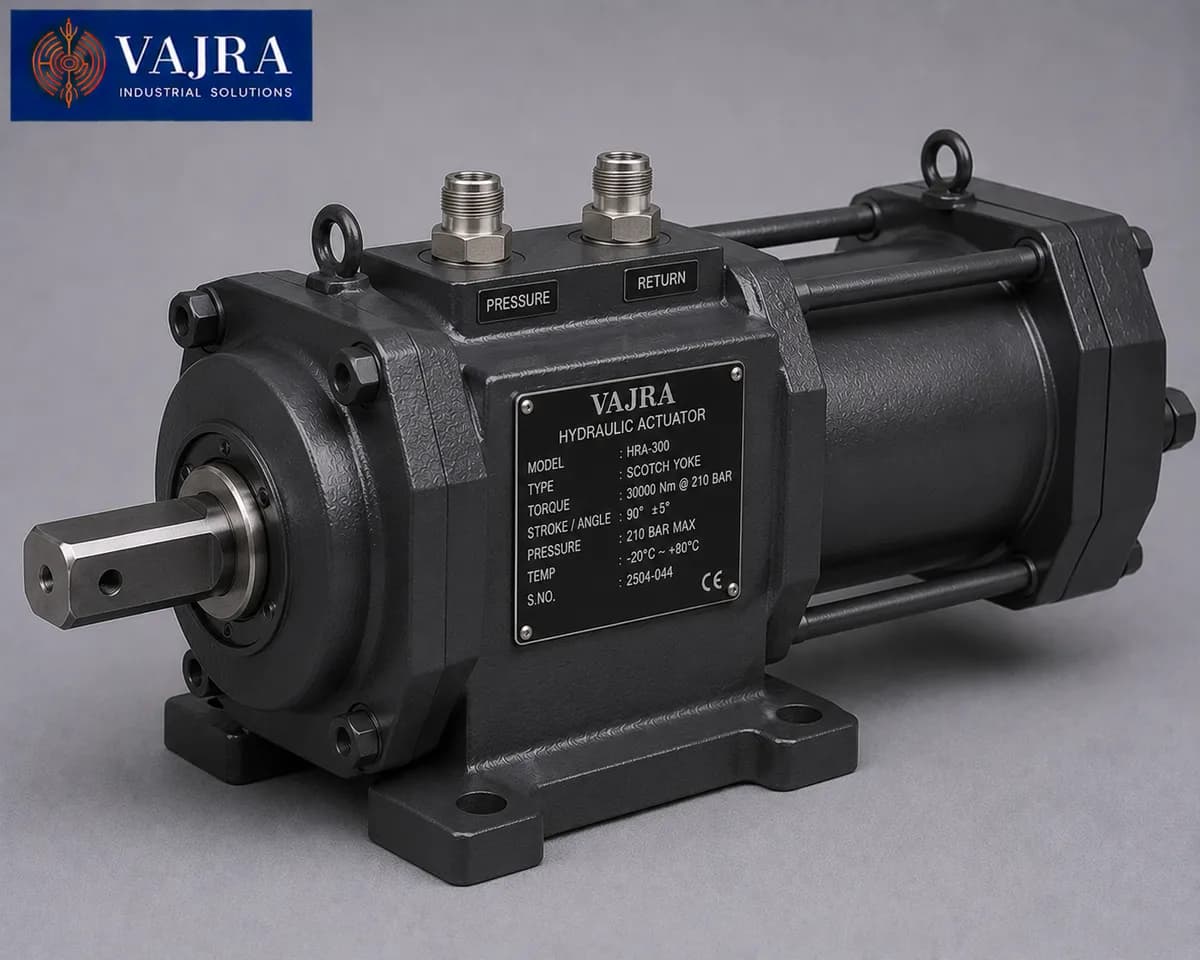
Hydraulic Actuator
High-force hydraulic actuator for large valves and emergency shutdown systems.
Technical SpecificationsNeed Actuators?
Get a competitive quote within 24 hours - API 6D, ASME B16.34 certified.
Frequently Asked Questions
Technical questions about Actuators - selection, materials, standards & ordering
What is the difference between a spring-return and a double-acting pneumatic actuator?+
Double-acting (DA) actuators use compressed air to drive the piston in both the open and close directions: both strokes are air-powered, giving maximum output torque in both directions. They require a continuous air supply to maintain any position and are used where a defined fail position on air loss is not required - or where a solenoid valve provides a programmed fail position. Spring-return (SR) actuators use air for one stroke and a bank of compression springs for the other. On air failure, the spring drives the valve to its preset fail position (fail-closed or fail-open) regardless of control system state - mandatory for ESD, fire isolation, and any safety-critical service.
How do I size a rack & pinion actuator for my ball or butterfly valve?+
Sizing requires the valve's maximum required torque (MRT) at worst-case conditions - typically at the start of opening or end of closing with maximum differential pressure and maximum packing friction. Apply a safety factor: 1.25× for double-acting, 1.50× for spring-return. Match this to the actuator's minimum output torque at the lowest supply pressure likely to be available in the field (typically 4 bar, not nominal 6 bar). The actuator supplier should confirm the torque at 4 bar for the specified spring configuration. Contact Vajra for a complete actuator-valve package sizing calculation.
What is NAMUR and why is it specified for actuators?+
NAMUR (Normierung Armaturantriebe in der Chemischen Industrie) is a standardised interface - a defined hole pattern on the actuator top cover - that allows direct mounting of solenoid valves, positioners, limit switches, and other accessories without custom brackets or adaptor plates. NAMUR-compatible accessories from different manufacturers are physically interchangeable, simplifying installation and reducing engineering cost. NAMUR also defines a standard signal interface (NAMUR proximity sensor output) for limit switches used with PLC/DCS safety systems.
What protection ratings and certifications are available for actuators and accessories?+
Standard aluminium actuators are rated IP65 (dust-tight, protected against water jets). Stainless steel and high-protection variants reach IP67 (1m immersion) or IP68 (continuous immersion). For hazardous area (classified Zone 1/Zone 2) installations, solenoid valves and limit switches are available with ATEX (EU Directive 2014/34/EU) and IECEx certification in Ex d (flameproof), Ex e (increased safety), or Ex ia (intrinsically safe) protection concepts. Specify the zone classification and gas group (IIA/IIB/IIC) when ordering accessories for hazardous areas.
Procurement & Specification
Typical Applications
Available Standards
Material Options
Documentation Available
- -EN 10204 3.1 Material Test Certificates (heat traceable)
- -API 598 hydrostatic shell & seat test reports
- -Dimensional inspection reports
- -Full Manufacturing Data Record (MDR) / data book on request
Inspection Options
- -In-house QC inspection on every order
- -Third-party inspection (SGS / Bureau Veritas / TÜV / DNV) coordination
- -Witness and hold points accommodated on request
Order Quantities
Flexible — from single critical-spare valves to full project lots.
Export
Worldwide export with complete documentation (COO, EUR.1, packing lists) to 20+ countries.
Custom Engineering
Built to your specification — materials, trim, pressure class and special service (NACE, fire-safe, IBR, cryogenic).
Delivery Support
Dispatch from Vadodara, Gujarat with documented lead times and priority handling for urgent requirements.
Engineering references
Connected Engineering
Technical Guides
Learn More About Actuators
Actuators & Automation · 9 min read
Industrial Valve Actuators: Pneumatic, Electric and Hydraulic Selection Guide
Selecting the right actuator type for an automated valve is as critical as selecting the valve itself. Pneumatic, electric, and hydraulic actuators each have distinct characteristics, advantages, and limitations that make them suitable for different process environments and control requirements.
Read Guide
Technical Guides · 9 min read
Valve Actuator Sizing: How to Calculate Breakaway Torque and Choose Pneumatic vs Electric
Selecting the wrong actuator - undersized torque, wrong fail-safe direction, or wrong actuator type - is one of the leading causes of valve automation failures. This guide covers the complete actuator sizing process: torque calculation, pneumatic vs electric selection, safety factor application, and fail-safe specification.
Read Guide
Technical Guides · 8 min read
Valve Accessories Selection Guide: Positioners, Limit Switches, Solenoids, and Handwheels
Automated valves require a range of accessories to function reliably in industrial control systems. This guide covers valve positioners, limit switches, solenoid valves, air filter regulators, handwheel overrides, locking devices, and I/P converters - with selection criteria for each.
Read Guide
Valve Comparisons