Pinch Valves
Flexible sleeve valves for abrasive slurry and solids handling applications.
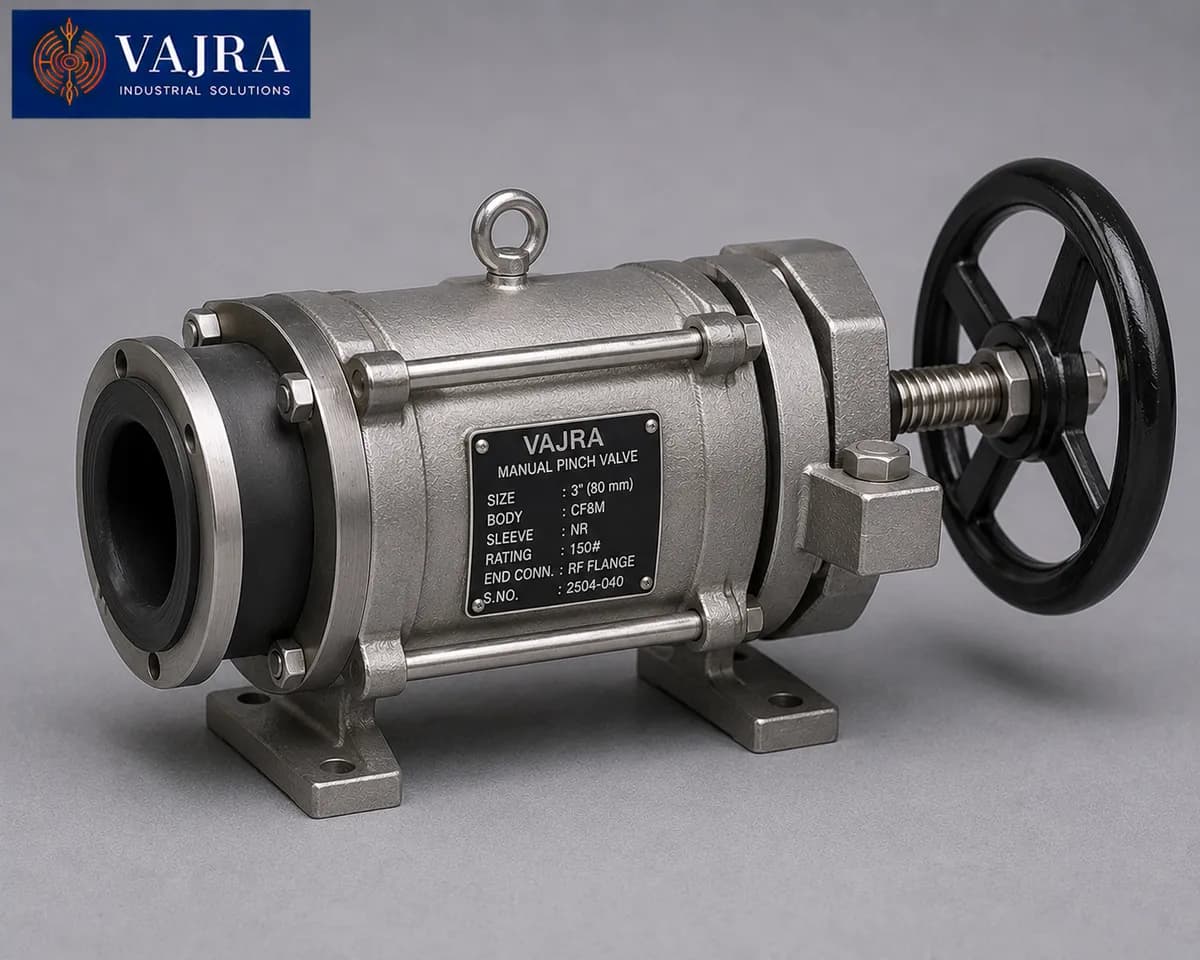
Manual Pinch Valve
Hand wheel or lever operated pinch valve for simple on-off and throttling.
Technical Specifications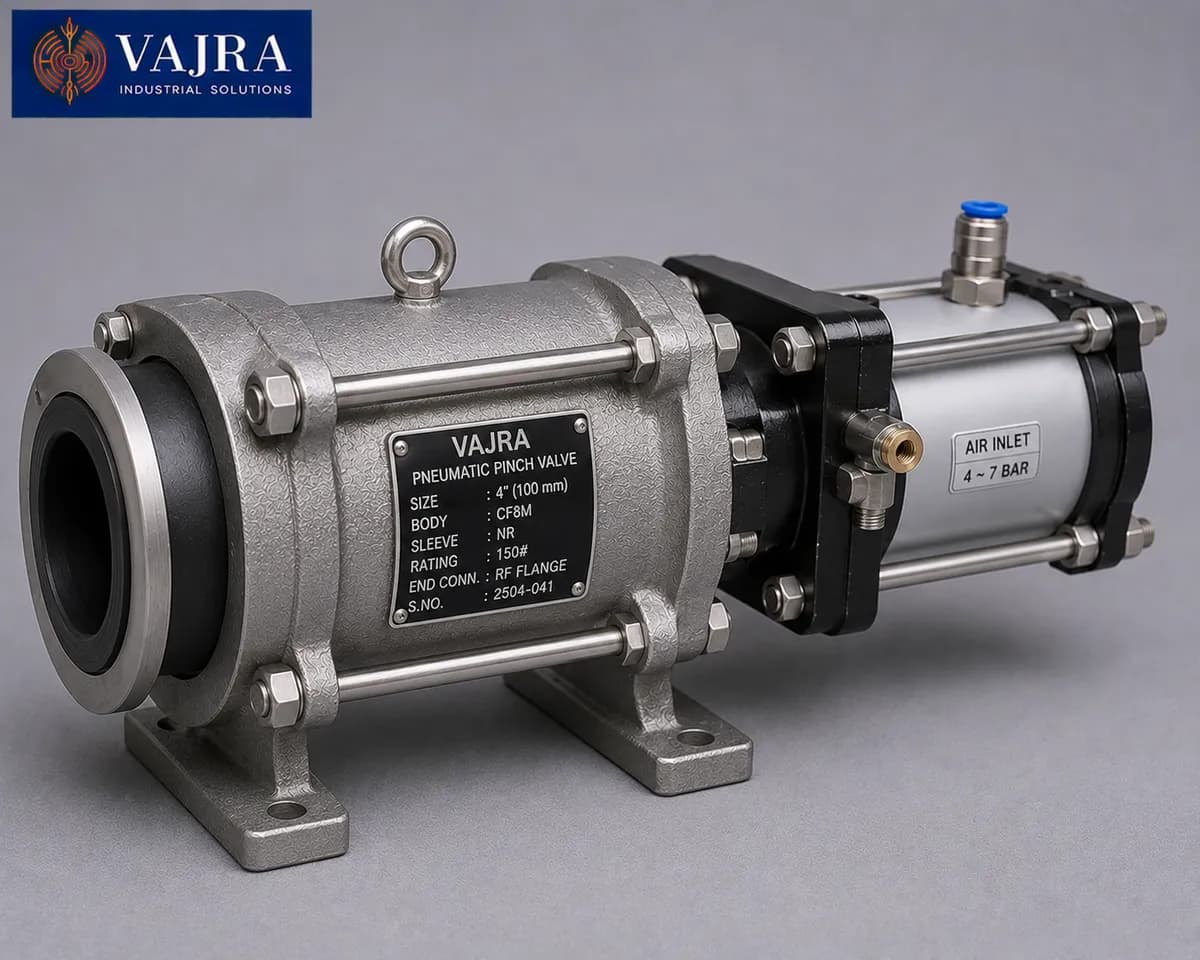
Pneumatic Pinch Valve
Air-operated pinch valve for automated control of abrasive and viscous fluids.
Technical SpecificationsNeed Pinch Valves?
Get a competitive quote within 24 hours - API 6D, ASME B16.34 certified.
Frequently Asked Questions
Technical questions about Pinch Valves - selection, materials, standards & ordering
How does a pinch valve work and what makes it suitable for slurry service?+
A pinch valve controls flow by mechanically compressing a flexible rubber sleeve (the only wetted component) between two pinch bars or by applying air pressure to an air-operated sleeve. When fully closed, the sleeve is pinched flat - providing complete bore closure with no dead zones, no pockets, and no seats for solids to accumulate. The rubber sleeve self-wipes as it closes, preventing solid build-up. The body and mechanism never contact the process fluid, eliminating corrosion, erosion, and contamination concerns. This makes pinch valves ideal for abrasive slurry, mining tailings, cement, sand, and any fluid carrying suspended solids.
What sleeve materials are available for pinch valves?+
Natural Rubber (NR): softest, most flexible, best abrasion resistance in low-speed slurry; not suitable for oils or oxidising chemicals. EPDM: hot water, steam, and chemical service; good ozone resistance. Neoprene: moderate oil and solvent resistance; general-purpose. Nitrile (NBR): oil, grease, and fuel service. Hypalon (CSPE): excellent chemical and UV resistance; chemical plant service. Viton (FKM): high-temperature and aggressive chemical resistance. For mining and quarry slurry, natural rubber or Neoprene is the most common specification; for chemical or wastewater service, EPDM or Hypalon.
Can pinch valves be used for throttling and flow control?+
Yes - pinch valves provide smooth, proportional throttling as the sleeve compression increases progressively from fully open to fully closed. The flow characteristic is approximately equal-percentage (flow increases rapidly near the open position and more slowly near closed), making pinch valves suitable for slurry dosing, sand feed control, and process line modulation. For precise modulating control, specify a pneumatic-actuated pinch valve with a positioner to provide repeatable, signal-controlled sleeve compression.
What is the service life of a pinch valve sleeve and when should it be replaced?+
Sleeve life depends on fluid abrasivity, operating pressure, cycle frequency, and sleeve material. In typical mining slurry service (coal or phosphate), natural rubber sleeves last 3–12 months with daily cycling. In lower-abrasivity wastewater or cement service, 1–3 years is achievable. The sleeve can be replaced in the field in under 30 minutes without removing the valve from the pipeline - the body halves separate or the sleeve slides out of the end flanges. Inspect sleeves regularly for cracking, delamination, or wall thinning.
Procurement & Specification
Typical Applications
Available Standards
Material Options
Documentation Available
- -EN 10204 3.1 Material Test Certificates (heat traceable)
- -API 598 hydrostatic shell & seat test reports
- -Dimensional inspection reports
- -Full Manufacturing Data Record (MDR) / data book on request
Inspection Options
- -In-house QC inspection on every order
- -Third-party inspection (SGS / Bureau Veritas / TÜV / DNV) coordination
- -Witness and hold points accommodated on request
Order Quantities
Flexible — from single critical-spare valves to full project lots.
Export
Worldwide export with complete documentation (COO, EUR.1, packing lists) to 20+ countries.
Custom Engineering
Built to your specification — materials, trim, pressure class and special service (NACE, fire-safe, IBR, cryogenic).
Delivery Support
Dispatch from Vadodara, Gujarat with documented lead times and priority handling for urgent requirements.
Engineering references
Connected Engineering
Technical Guides
Learn More About Pinch Valves
Valve Selection · 8 min read
Pinch Valve Guide: Design, Selection and Applications in Slurry Service
Pinch valves use a flexible rubber or elastomeric sleeve to shut off or throttle flow - the closure mechanism never contacts the process fluid directly, making them ideal for abrasive slurries, granular solids, corrosive chemicals and fibrous media where conventional metal valves would wear rapidly. This guide covers pinch valve types, sleeve selection, pressure ratings and application best practices.
Read Guide
Materials & Standards · 8 min read
Industrial Valve Materials Guide: Carbon Steel, Stainless Steel, Alloy Steel and Exotic Alloys
Selecting the right valve material is critical to safety, longevity, and total cost of ownership. This guide covers all common valve body and trim materials - from carbon steel WCB to exotic Hastelloy and Inconel - with applications, temperature limits, and ASTM designations.
Read Guide
Valve Selection · 9 min read
Valve Trim Selection: Soft Seat vs Metal Seat - A Technical Guide
Choosing between soft seat and metal seat trim is one of the most critical decisions in valve specification. Soft seats provide bubble-tight shut-off but are limited by temperature and abrasion; metal seats endure extreme temperatures and erosive service but require tighter machining tolerances. This guide breaks down the key differences.
Read Guide