Check Valves
Non-return valves to prevent backflow and protect equipment in piping systems.
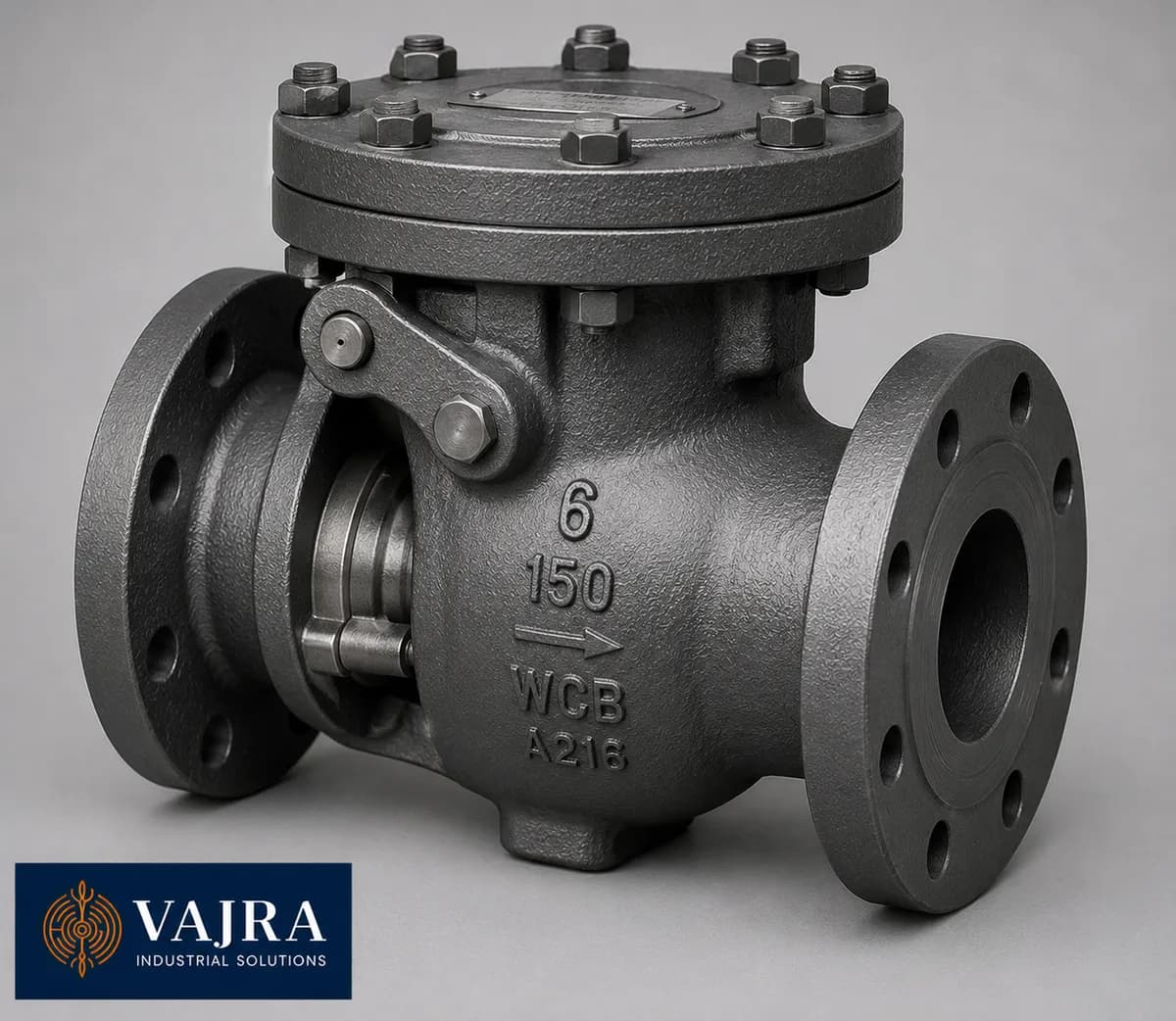
Swing Check Valve
Traditional hinged disc design for horizontal or vertical upward flow applications.
Technical Specifications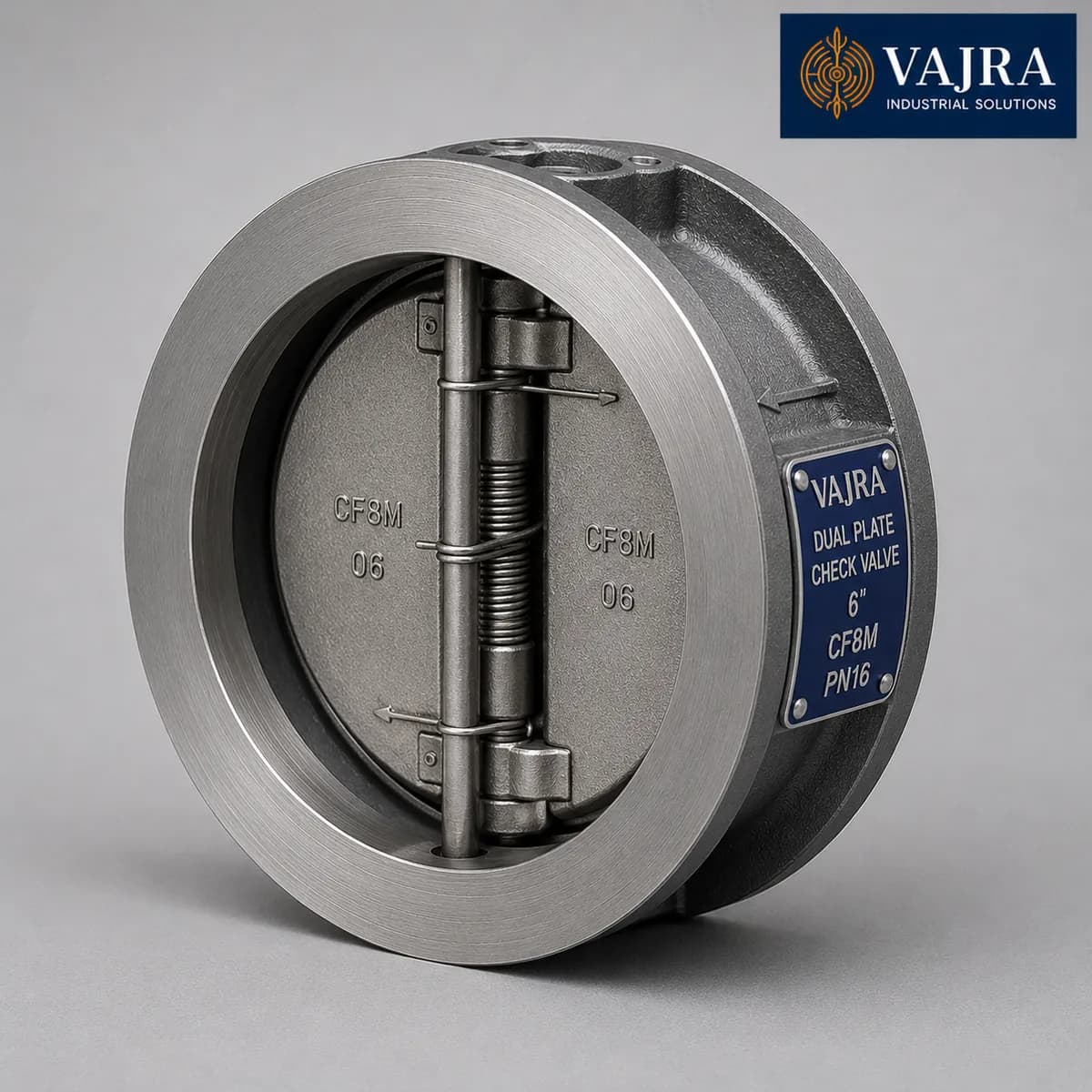
Dual Plate Check Valve
Compact wafer-style check valve with twin spring-loaded plates for quick closure.
Technical Specifications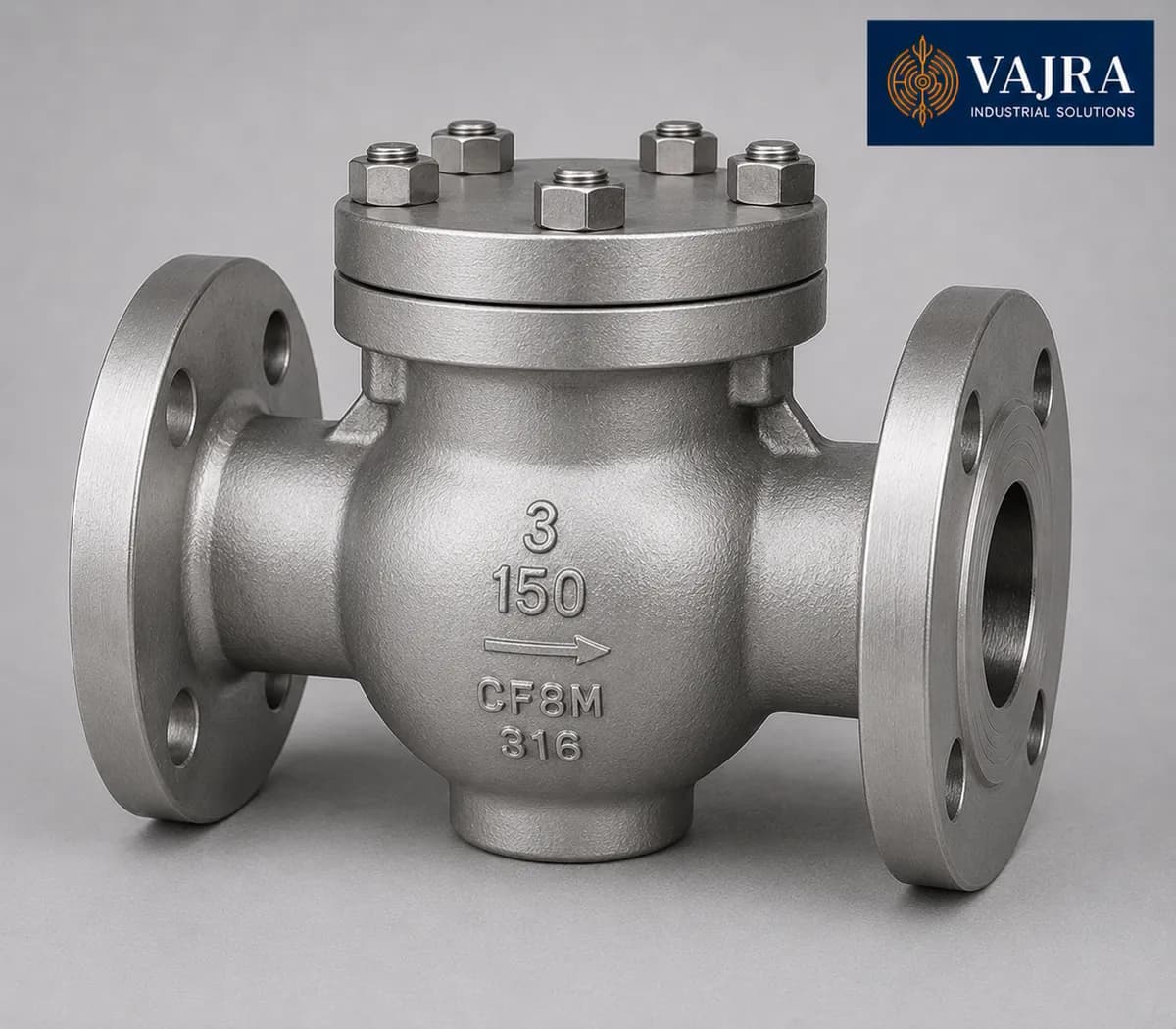
Lift Check Valve
Piston or ball type lift check for vertical flow and high-pressure applications.
Technical Specifications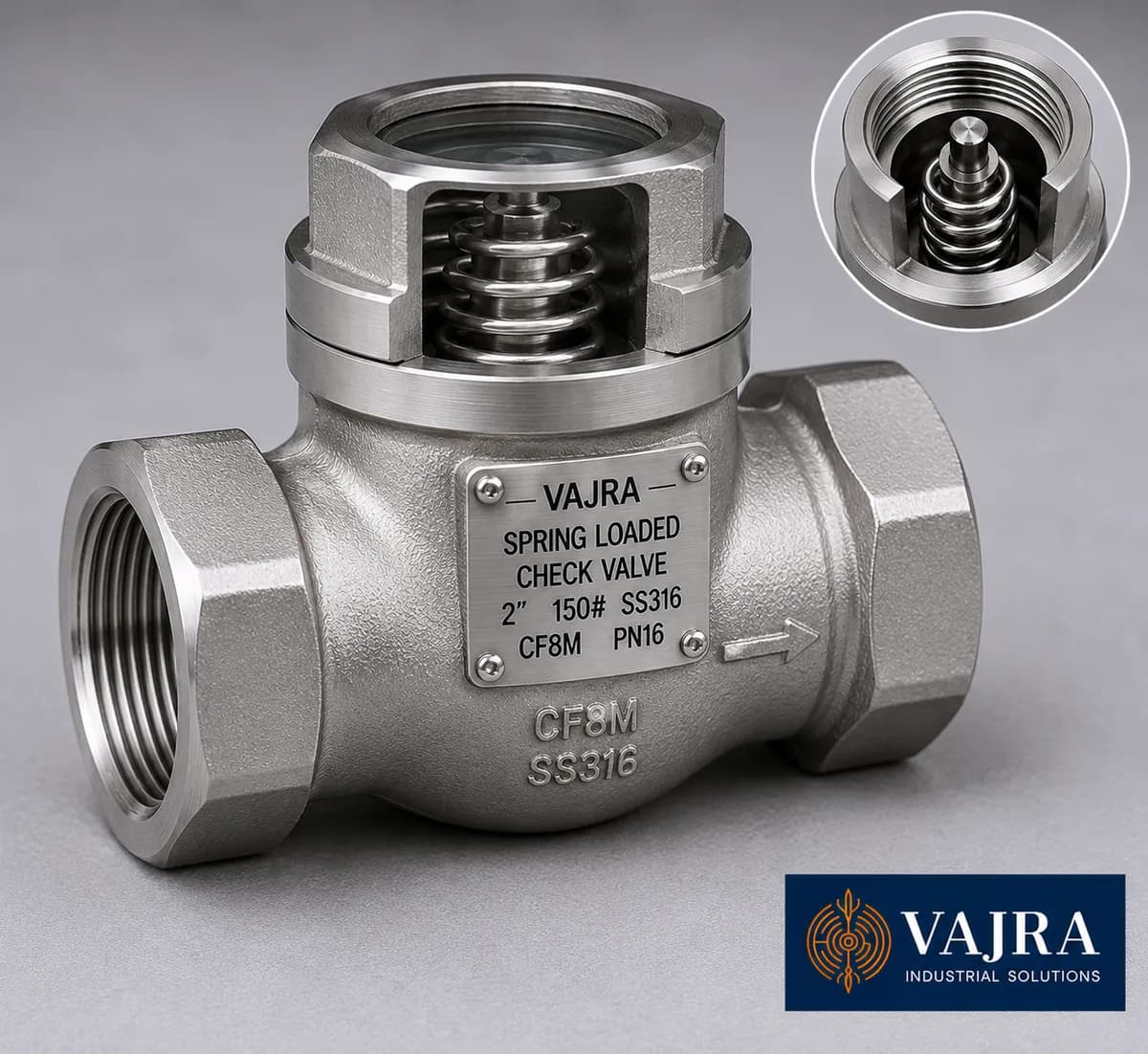
Spring Loaded Check Valve
Non-slam design with spring-assisted closure for water hammer prevention.
Technical Specifications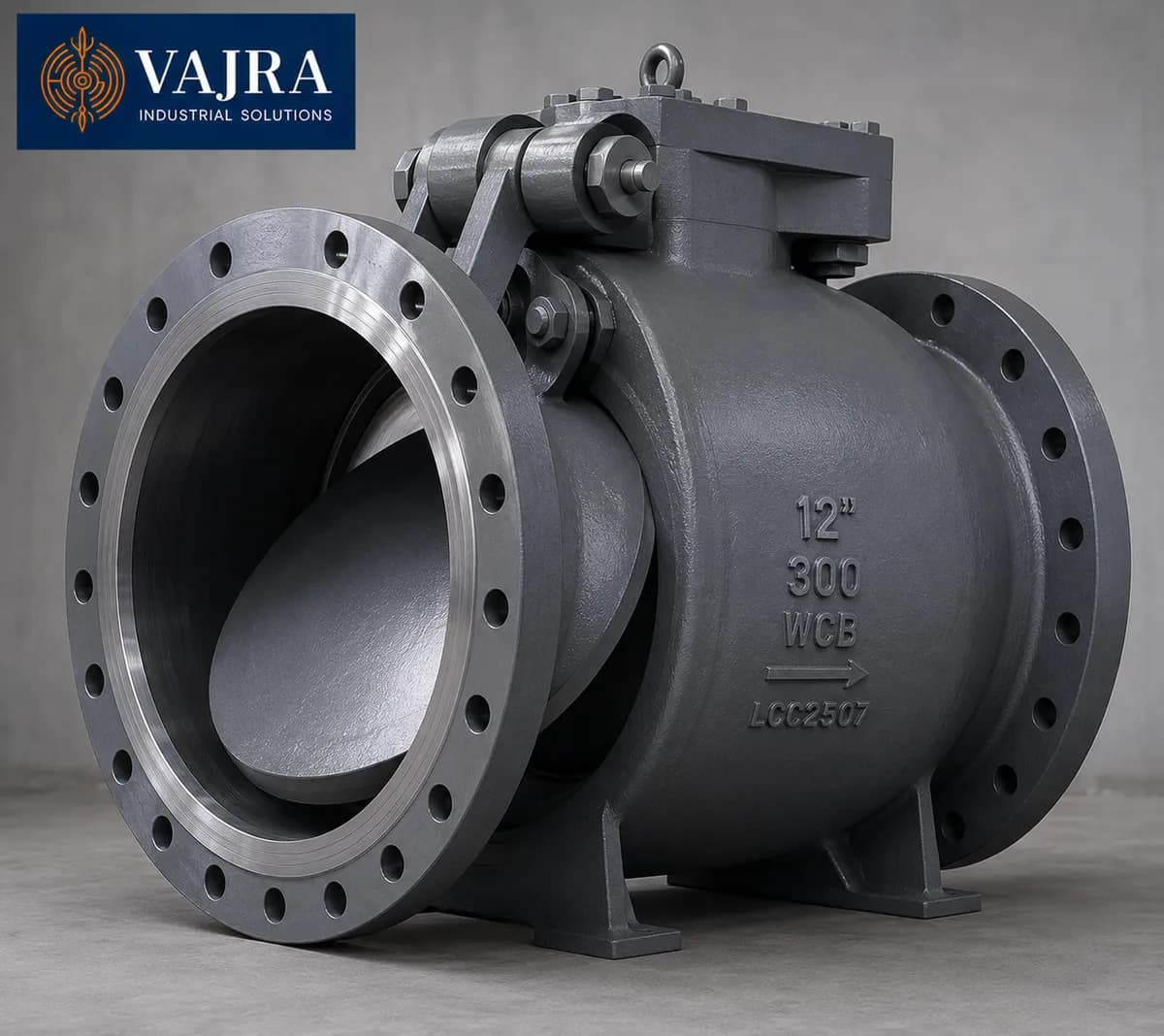
Tilting Disc Check Valve
Pivoting disc design with low cracking pressure and near-silent non-slam closure for large pipelines.
Technical Specifications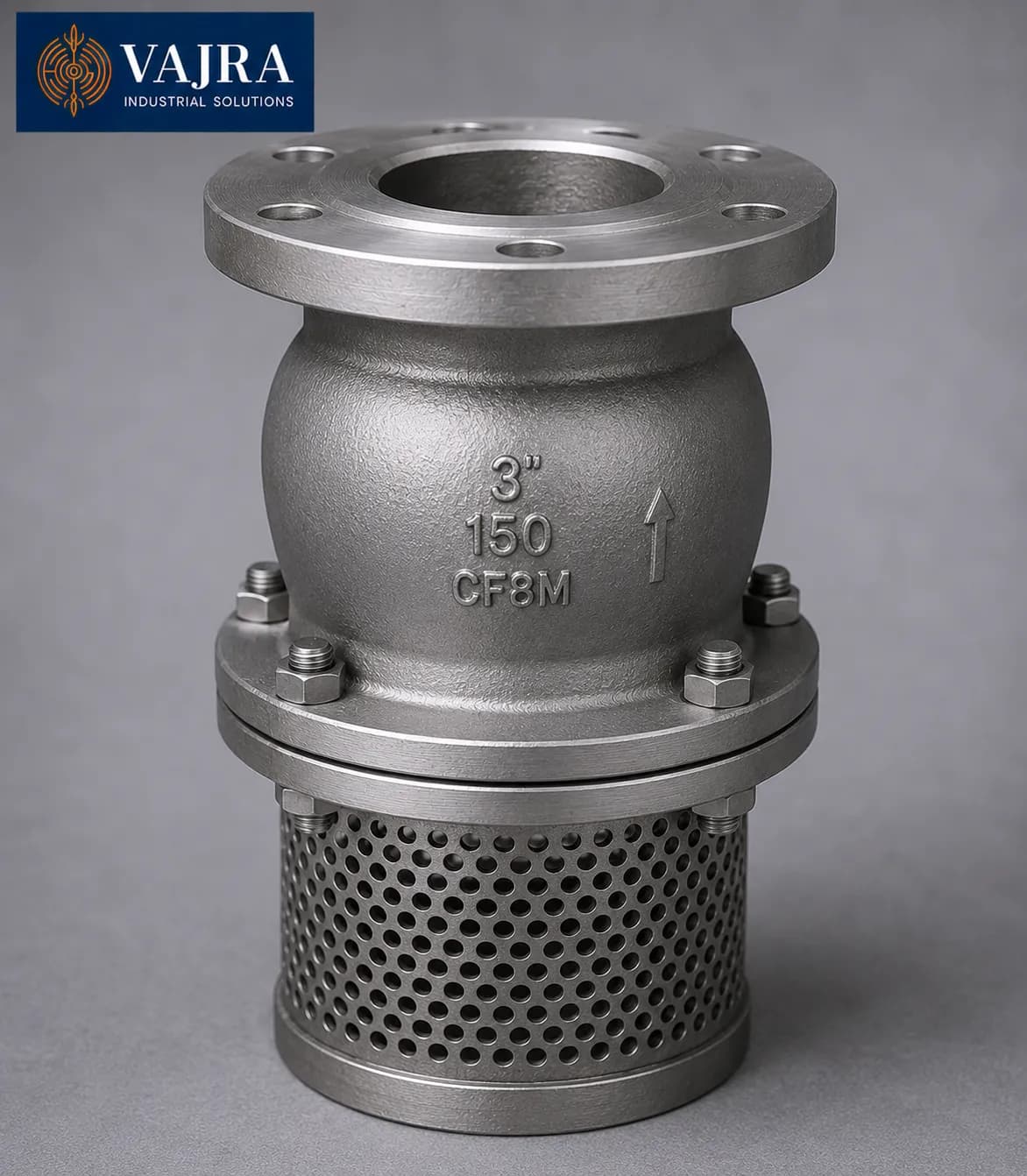
Foot Valve
Suction-line check valve with integral strainer installed at the pump inlet to maintain prime and prevent backflow.
Technical SpecificationsNeed Check Valves?
Get a competitive quote within 24 hours - API 6D, ASME B16.34 certified.
Frequently Asked Questions
Technical questions about Check Valves - selection, materials, standards & ordering
Swing check vs. dual plate check - which is better for pump discharge?+
Dual plate (double door) check valves are the preferred choice for pump discharge in most applications: spring-loaded plates begin closing before flow reversal occurs - eliminating the water hammer spike (pressure transient) that swing checks can generate when they slam shut after pump trip. Dual plate checks also have a much shorter face-to-face dimension. Swing checks are still used in low-velocity gravity drain and sewer applications, or where the low cracking pressure of a spring-free swing check is needed.
Can check valves be installed in vertical pipelines?+
Yes, but orientation matters. Swing check valves require horizontal pipe or vertical upward flow - gravity must assist disc closure; they cannot be installed in vertical downward flow lines. Dual plate check valves (with central spring) can be installed horizontally or in vertical upward flow. Tilting disc check valves and spring-loaded lift check valves can operate in any orientation. When ordering for vertical service, always state flow direction to confirm spring tension selection.
What is cracking pressure in a check valve?+
Cracking pressure is the minimum upstream pressure differential (above downstream pressure) required to open the check valve. For standard spring-loaded dual plate check valves: 0.07–0.2 bar. For swing checks without a spring: 0.02–0.05 bar. For spring-loaded piston check valves: 0.1–0.5 bar depending on spring rating. In systems with very low differential pressure - such as gravity-flow lines or low-head pumping - always verify that the available differential exceeds the check valve cracking pressure.
Do you supply check valves for gas and high-pressure applications?+
Yes - dual plate check valves, tilting disc check valves, and piston-lift check valves are all available in Carbon Steel, Stainless Steel, and Duplex for gas service at high pressure. For compressor discharge service (pulsating flow), contact us for spring-selection guidance - the spring must be stiff enough to prevent valve flutter (rapid oscillation) but compliant enough to open at the available differential. API 6D compliance and all-position test certificates are provided.
Procurement & Specification
Typical Applications
Available Standards
Material Options
Documentation Available
- -EN 10204 3.1 Material Test Certificates (heat traceable)
- -API 598 hydrostatic shell & seat test reports
- -Dimensional inspection reports
- -Full Manufacturing Data Record (MDR) / data book on request
Inspection Options
- -In-house QC inspection on every order
- -Third-party inspection (SGS / Bureau Veritas / TÜV / DNV) coordination
- -Witness and hold points accommodated on request
Order Quantities
Flexible — from single critical-spare valves to full project lots.
Export
Worldwide export with complete documentation (COO, EUR.1, packing lists) to 20+ countries.
Custom Engineering
Built to your specification — materials, trim, pressure class and special service (NACE, fire-safe, IBR, cryogenic).
Delivery Support
Dispatch from Vadodara, Gujarat with documented lead times and priority handling for urgent requirements.
Engineering references
Connected Engineering
Technical Guides
Learn More About Check Valves
Valve Selection · 8 min read
Check Valve Types: Swing, Dual Plate, Lift, Tilting Disc & Wafer - Complete Guide
Check valves (non-return valves) are the only self-acting valve type in industrial piping - they open on forward flow and close automatically when flow stops or reverses, protecting pumps, compressors, and pipelines from reverse flow damage. Selecting the right check valve type is critical to prevent water hammer, excessive pressure drop, and premature failure.
Read Guide
Industry Applications · 10 min read
How to Specify Industrial Valves for Chemical Service: A Complete Guide
Chemical plants handle some of the most aggressive fluids in any industry - strong acids, chlorinated solvents, caustic solutions, oxidising agents, and toxic gases. Specifying the wrong valve body material, seat, or seal material can lead to catastrophic corrosion, product contamination, or unsafe failure. This guide covers every variable in chemical valve specification.
Read Guide
Valve Engineering · 12 min read
Subsea and Offshore Valve Design: Requirements, Standards, and Selection
Subsea valves operate in one of the most demanding environments in engineering - extreme hydrostatic pressure, total inaccessibility for maintenance, corrosive seawater, and the consequences of any failure measured in catastrophic oil spills or production losses of millions of dollars per day. This guide covers the design standards, testing requirements, and material specifications that define subsea and offshore topsides valve engineering.
Read Guide
Valve Comparisons