Needle Valves
Precision needle valves for accurate flow control in instrumentation and sampling systems.
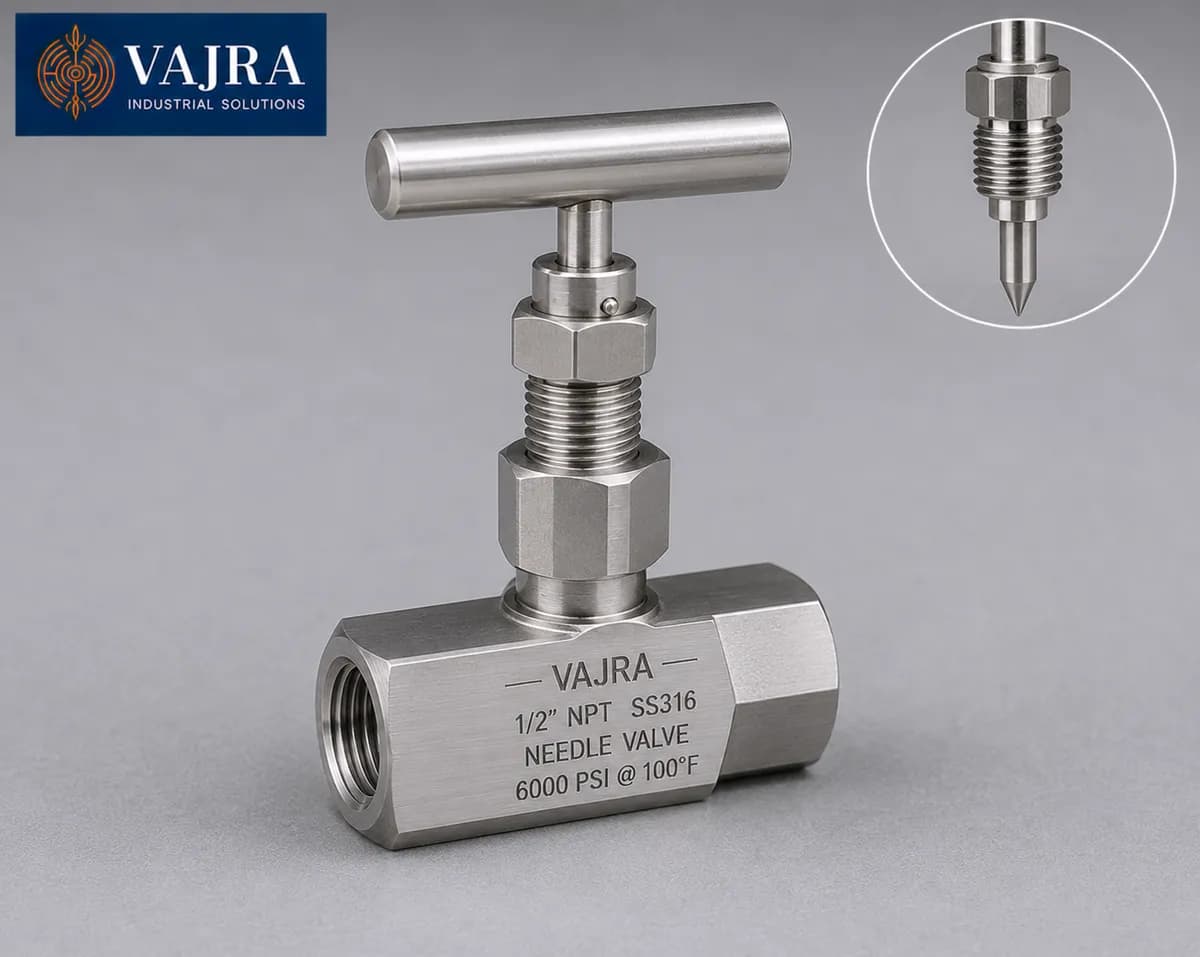
Standard Needle Valve
Fine adjustment needle valve for precise flow control in instrumentation applications.
Technical Specifications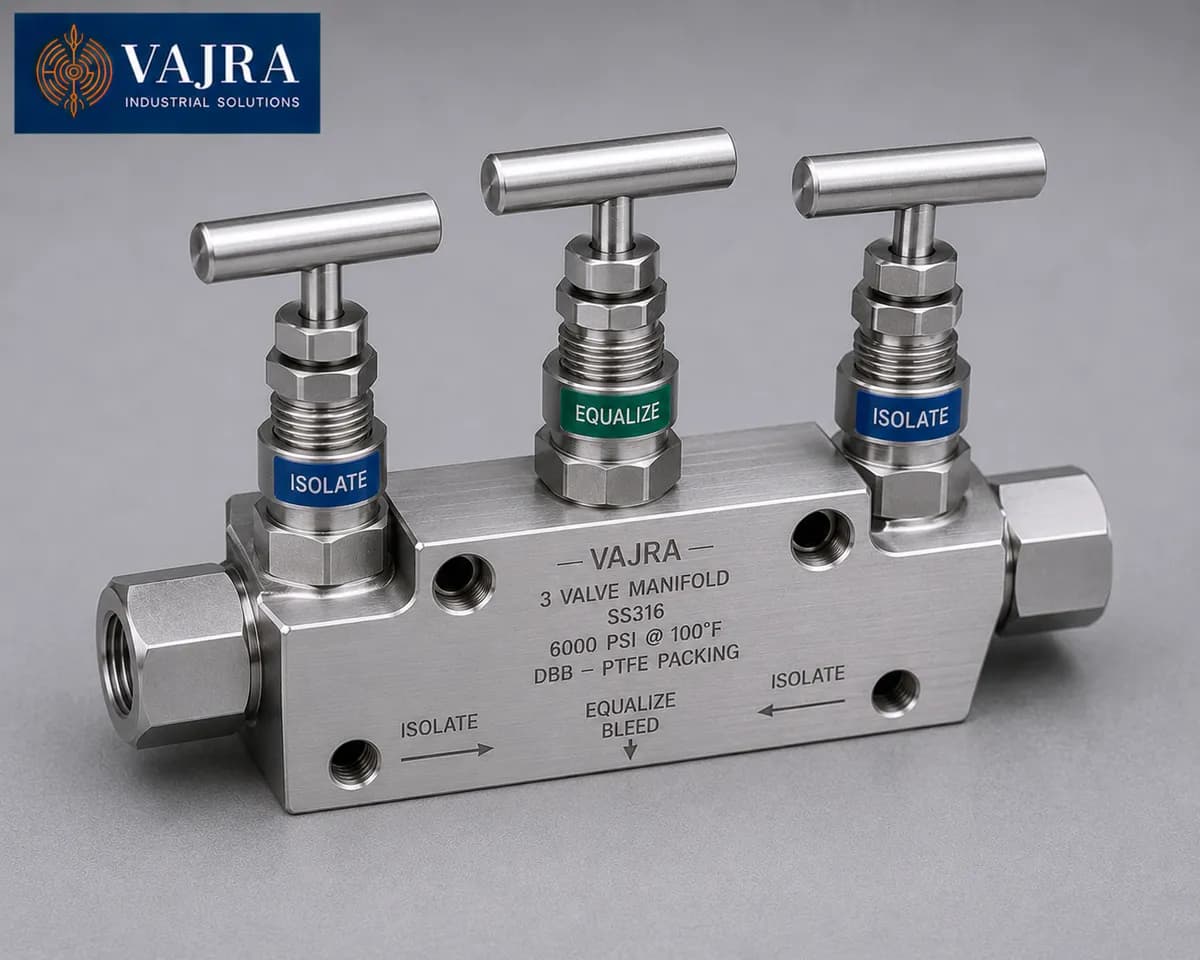
Multiport Needle Valve
Multiple port configuration for instrument root valve applications.
Technical SpecificationsNeed Needle Valves?
Get a competitive quote within 24 hours - API 6D, ASME B16.34 certified.
Frequently Asked Questions
Technical questions about Needle Valves - selection, materials, standards & ordering
What is a 5-valve manifold and when is it used?+
A 5-valve manifold is used with differential pressure (DP) transmitters - the standard instrument for measuring flow rate, liquid level, and density. The manifold consists of two needle isolation valves (block process from transmitter), two equalisation valves (equalise pressure across both transmitter chambers to zero it safely), and one bleed/drain needle valve. The five-valve arrangement allows the transmitter to be calibrated (zeroed with equalised pressure) and removed from the process line safely without any line shutdown or isolation of the measurement point.
What pressure ratings are available for instrument needle valves?+
Standard needle valves are available at 3,000 psi (207 bar) in 1/4"–1/2" sizes and 6,000 psi (414 bar) in high-pressure instrument versions. Special designs up to 10,000 psi (690 bar) and 20,000 psi (1380 bar) are available for wellhead and subsea applications. The pressure rating of the needle valve must always equal or exceed the Maximum Allowable Working Pressure (MAWP) of the instrumentation line it protects.
Can needle valves be used for gas and hydrogen service?+
Yes - needle valves are widely used in gas service for sample probe connections, vent and bleed connections, and pressure transmitter root valve isolation. For hydrogen service, specify SS316 or Inconel 625 body with graphite (not PTFE) packing - PTFE can absorb hydrogen under pressure and embrittle. For sour gas service (H₂S), specify NACE MR0175-compliant materials: hardness-controlled SS316L or Alloy 20 body with Alloy 20 or Inconel stem.
What is the difference between a straight-pattern and angle-pattern needle valve?+
Straight-pattern (inline) needle valves have both pipe connections at 180° to each other - the valve installs in-line in the tubing run with no change in direction. Angle-pattern needle valves have connections at 90° - they allow a directional change in instrument tubing layout while providing isolation at the same point, eliminating one tube bend and reducing the number of fittings in congested instrument panels. Both patterns are available in identical pressure ratings and materials.
Procurement & Specification
Typical Applications
Available Standards
Material Options
Documentation Available
- -EN 10204 3.1 Material Test Certificates (heat traceable)
- -API 598 hydrostatic shell & seat test reports
- -Dimensional inspection reports
- -Full Manufacturing Data Record (MDR) / data book on request
Inspection Options
- -In-house QC inspection on every order
- -Third-party inspection (SGS / Bureau Veritas / TÜV / DNV) coordination
- -Witness and hold points accommodated on request
Order Quantities
Flexible — from single critical-spare valves to full project lots.
Export
Worldwide export with complete documentation (COO, EUR.1, packing lists) to 20+ countries.
Custom Engineering
Built to your specification — materials, trim, pressure class and special service (NACE, fire-safe, IBR, cryogenic).
Delivery Support
Dispatch from Vadodara, Gujarat with documented lead times and priority handling for urgent requirements.
Engineering references
Technical Guides
Learn More About Needle Valves
Valve Selection · 7 min read
Needle Valve Applications and Selection Guide
Needle valves provide precise flow throttling and positive shut-off in instrument, sampling and hydraulic service. This guide covers construction types, pressure-temperature ratings, materials and selection criteria for demanding applications.
Read Guide
Technical Guides · 9 min read
Industrial Valve End Connections: Flanged, Threaded, Socket Weld, and Butt Weld
Selecting the wrong end connection can cause joint leakage, stress concentrations, or assembly impossibility in the field. This guide covers all major valve end connection types - their standards, pressure-temperature limits, and when to use each.
Read Guide
Materials & Standards · 8 min read
Industrial Valve Materials Guide: Carbon Steel, Stainless Steel, Alloy Steel and Exotic Alloys
Selecting the right valve material is critical to safety, longevity, and total cost of ownership. This guide covers all common valve body and trim materials - from carbon steel WCB to exotic Hastelloy and Inconel - with applications, temperature limits, and ASTM designations.
Read Guide
Valve Comparisons